Most healthy dogs can eat a small amount of plain, fully cooked egg. That simple answer needs boundaries. An egg is not a complete dog diet, its calories still count, preparation can introduce fat, salt, toxic seasonings, or foodborne germs, and an individual dog may have a medical or dietary reason to avoid it. “Can dogs eat eggs?” is therefore less useful than “Does this particular preparation and portion fit this particular dog’s feeding plan?”
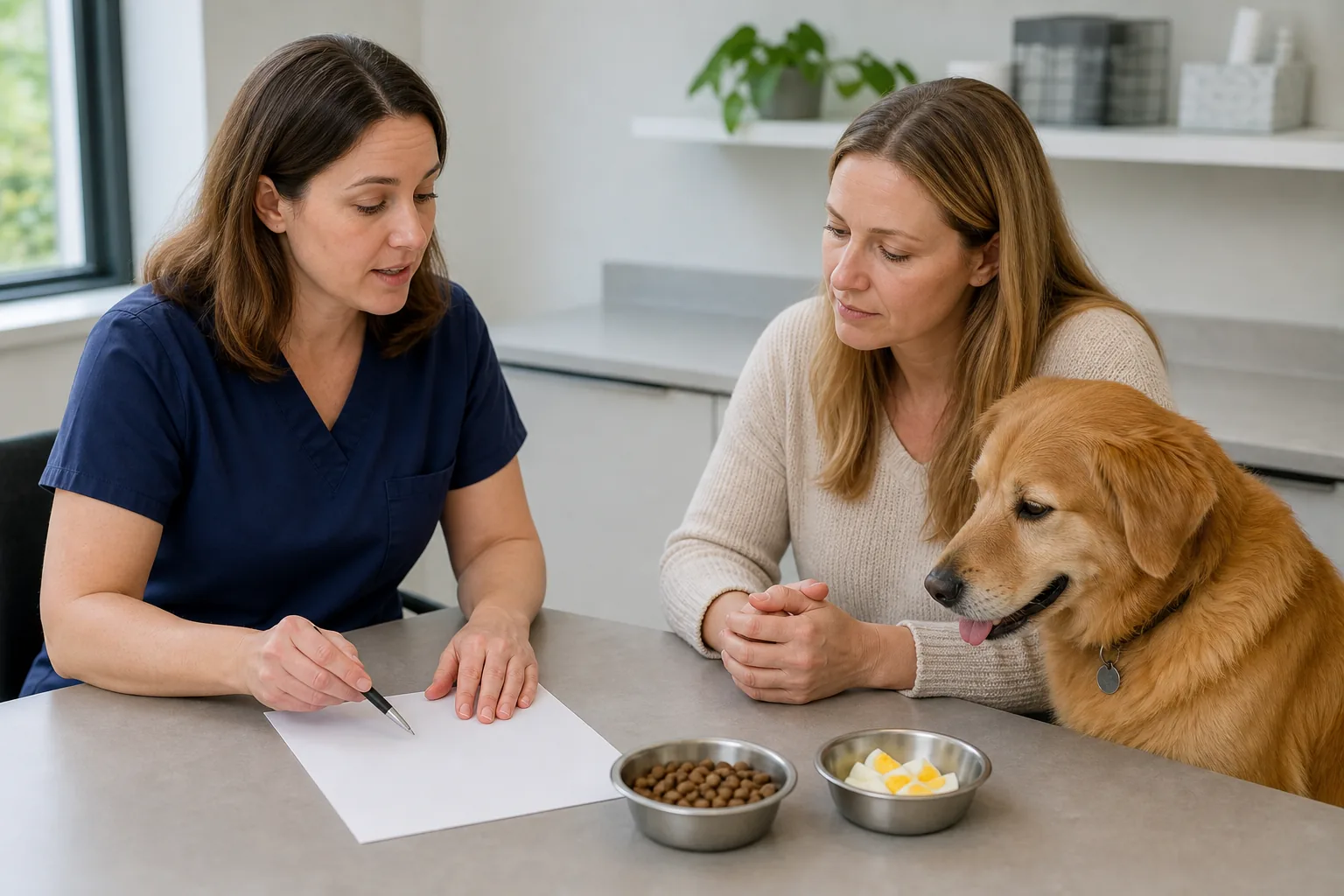
Treat egg as an optional extra, not a nutritional repair kit. Begin with the dog’s complete and balanced primary food, preserve the measured daily calorie target, prepare the egg without unsafe additions, and introduce only a small amount. If the dog has a prescription diet, a history of pancreatitis or food reaction, recurrent digestive signs, obesity, or another health condition, ask the veterinary team before adding it.
This guide addresses eggs deliberately shared as an occasional food. It does not replace veterinary care after a dog eats a large egg dish, raw batter, spoiled food, shell fragments, packaging, or ingredients such as onion, garlic, xylitol, chocolate, raisins, alcohol, or excessive fat.
The practical answer in one view
For an otherwise healthy dog:
- Use a fresh, intact egg stored correctly.
- Cook the white and yolk thoroughly.
- Serve it plain, without butter, oil, salt, sauce, or seasoning.
- Start with a small amount rather than a whole egg by default.
- Count it within the dog’s daily extra-food budget.
- Observe for vomiting, diarrhea, itching, facial swelling, or another change.
That is a permission framework, not a prescription. A dog does not need egg in order to have a good diet, and refusing egg is not a nutritional problem when the regular food is appropriate and eaten normally.
Why preparation matters more than the ingredient name
“Egg” can mean a hard-cooked egg, runny fried egg, cheese omelet, mayonnaise-rich salad, raw baking mixture, powdered product, or an entire breakfast sandwich. These are not interchangeable exposures.
A plain cooked egg has a relatively short ingredient list. An omelet may include butter, oil, cheese, processed meat, onion, garlic, hot sauce, and salt. A dessert batter may contain chocolate, raisins, xylitol-sweetened ingredients, alcohol, or raw flour as well as raw egg. Packaging and skewers create physical hazards. Evaluate the whole dish before deciding what to do.
When an accidental exposure includes a potentially toxic ingredient, contact a veterinarian or animal poison service with the recipe, product label, dog’s weight, estimated amount, and time. Do not wait for symptoms to calculate risk from memory.
Cook eggs thoroughly
The CDC includes uncooked eggs among raw animal proteins that can carry germs and advises against raw pet food and treats. The FDA notes that even clean, uncracked shell eggs may contain Salmonella and recommends refrigeration and thorough cooking. For a dog’s optional treat, there is no useful reason to accept the avoidable household exposure created by raw egg.
Cook until white and yolk are firm. For mixed egg dishes, the USDA safe-temperature chart lists 160°F (71.1°C) for eggs. A food thermometer is more reliable than color for a thick dish. If microwaving, stir and allow heat to distribute so cold pockets do not remain.
Cooking protects people as well as pets. A dog exposed to contaminated raw food may spread germs through the environment and feces even when obvious illness is absent. Children, older adults, pregnant people, and people with weakened immune systems face greater risk from foodborne disease. Preventing raw egg from contaminating hands, counters, bowls, toys, and the dog’s face is part of responsible pet feeding.
Pasteurized egg products reduce certain raw-egg risks for human recipes, but “pasteurized” does not transform egg into a complete dog food or erase calorie and medical considerations. Plain thorough cooking remains the simplest household approach for an occasional dog portion.
Choose a plain cooking method
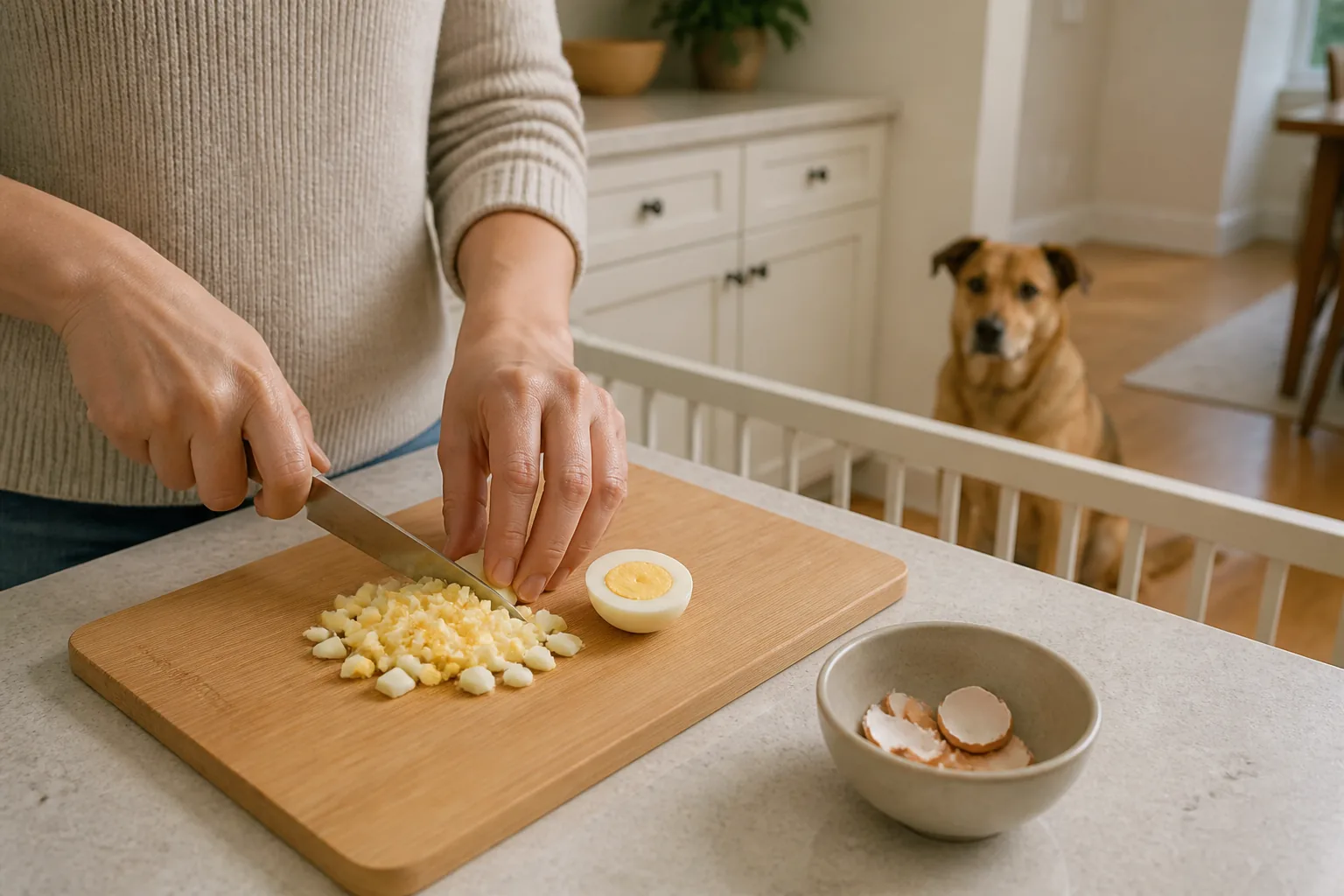
Hard-cooked, poached, or scrambled egg can work if it is fully cooked and prepared without added fat or seasoning. A clean nonstick pan may allow scrambling without butter or oil. Cool the portion before serving and break it into pieces appropriate for the dog.
Avoid:
- butter, bacon grease, and generous cooking oil
- salt, salty seasoning blends, and processed meat
- onion, garlic, chives, leeks, and sauces containing them
- hot peppers and strongly spiced sauces
- cheese or cream added automatically
- raw or runny egg
- spoiled egg or food left unrefrigerated
- a whole egg served inside its shell
The issue is not that one drop of ordinary cooking oil automatically poisons a dog. It is that extras increase calories, fat, sodium, and ingredient complexity without improving the reason for offering egg. Rich preparation may be particularly inappropriate for a dog with gastrointestinal disease, pancreatitis history, or a fat-restricted plan.
How much egg should a dog get?
There is no correct “one egg per dog” rule. Dogs range from a few pounds to well over one hundred, eggs vary in size, and daily calorie needs differ with age, body condition, activity, neuter status, environment, and health. A whole large egg can consume a meaningful share of a small dog’s daily energy while being a smaller fraction for a large dog.
Look up the calories for the exact egg size or packaged egg product rather than relying on a universal number. USDA FoodData Central is a public food-composition database that can support this check. Cooking fat and additions must be counted separately.
Veterinary nutrition guidance commonly limits treats and other foods outside a complete diet to about ten percent of daily calories, leaving at least ninety percent for the complete and balanced food. This is a ceiling for the combined extras, not a daily egg entitlement. Training treats, dental chews, table food, toppers, supplements with calories, and egg all share the same allowance.
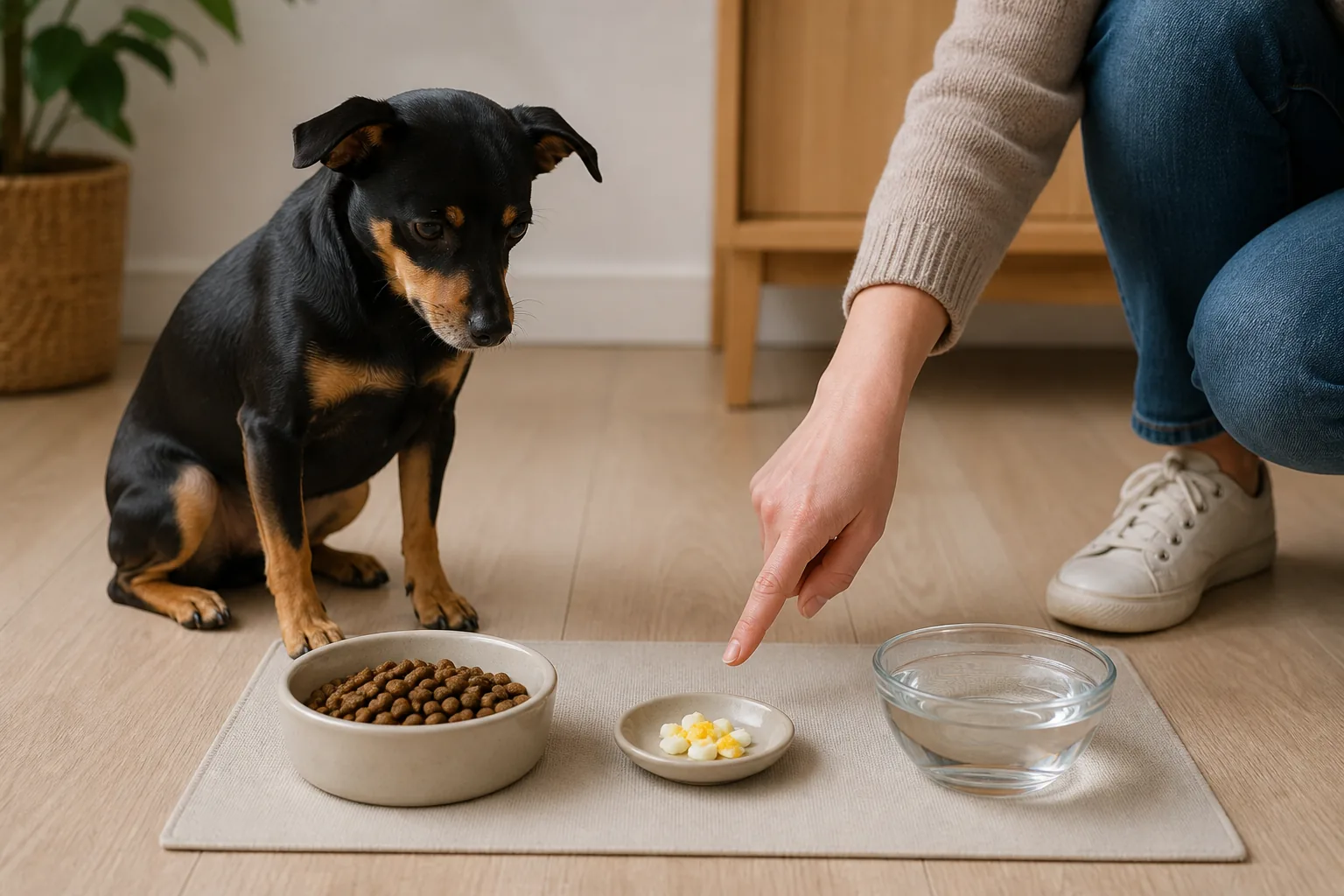
For a first trial, use a small piece or spoonful from a plain cooked egg. Refrigerate the remainder rather than scaling the dog’s portion to avoid human food waste. A very small dog may need only tiny pieces. A larger dog still does not need a whole egg if other extras already fill the budget.
If the dog needs weight loss or has a precisely prescribed calorie target, ask whether egg belongs in the plan at all. Replacing part of the complete food with egg changes nutrient balance; adding it on top changes calories. Neither should happen casually every day.
Use a daily ration container
Put the dog’s measured daily regular food and allowed treats into a single container. If egg will be offered, record its calories and reduce other extras—not the complete food—unless a veterinarian or veterinary nutritionist has formulated a specific substitution.
Family members often each believe they gave “just a little.” A shared log or container prevents four small portions from becoming a meal. Record unusual extras for a week when evaluating weight, stool, or appetite.
Do not use egg to persuade a healthy dog to eat every meal without understanding why appetite changed. Repeatedly upgrading the bowl can unbalance intake and mask nausea, dental pain, or another problem. If the dog is not eating normally, use the separate appetite-loss guide and contact the veterinary team as appropriate.
Introduce egg as one controlled variable
Choose a day when the dog is well and the ordinary diet is stable. Offer a small plain cooked amount. Do not introduce a new chew, topper, supplement, and egg simultaneously. Observe over the following day or two for stool change, vomiting, increased gas, itching, hives, facial swelling, ear or skin flare, or reduced appetite.
Mild soft stool after a rich or novel extra is a reason to stop and reassess, not proof of an allergy. Food reactions cannot be diagnosed from one nonspecific sign. Repeated symptoms or a history of dietary sensitivity deserve veterinary guidance.
Seek urgent care for breathing difficulty, collapse, rapidly developing facial swelling, repeated vomiting, severe lethargy, abdominal pain, or another acute concerning sign. Do not retry a food after a suspected significant reaction without professional advice.
Eggs and food allergy questions
Egg protein can be relevant to an individual dog’s food-reaction evaluation, but online ingredient lists cannot diagnose an allergy. Skin and gastrointestinal signs have many causes. Veterinary elimination trials use a carefully selected diet for a defined period and control every food exposure.
If the dog is undergoing an elimination or hydrolyzed-diet trial, do not offer egg unless the supervising veterinarian explicitly approves it. A bite can introduce an excluded protein and make the result harder to interpret. Check flavored medications, supplements, chews, and foods used to hide pills as well.
Do not conclude that a dog “needs egg for the coat” and override a diagnostic diet. A complete food appropriate to the dog should supply required nutrients; adding a popular ingredient is not targeted treatment.
Eggs in prescription and medical diets
A prescription diet is designed for a clinical purpose. Egg may change protein, phosphorus, fat, sodium, calories, or the diagnostic purity of that plan. Dogs with kidney, liver, pancreatic, gastrointestinal, urinary, endocrine, or other disease need individual advice.
For pancreatitis history or fat restriction, the yolk and any cooking fat may be relevant. For obesity, calorie density matters. For diabetes, meal composition and timing may interact with the treatment plan. For swallowing or dental problems, texture must be selected safely. These are reasons to ask the veterinarian, not reasons to improvise with egg white, yolk, or shell as if one component were medicine.
Do not alter insulin or another medication because egg was added or refused. Contact the prescriber for instructions when food intake differs from the medical plan.
Should dogs eat eggshells?
Do not hand a dog a whole shell-on egg. Shell fragments can be sharp or difficult to chew, the exterior can carry contamination, and whole eggs can become a gulping hazard. More importantly, using shell as a calcium supplement without formulating the entire diet can create nutritional imbalance.
Calcium needs depend on life stage and the complete recipe. Growing large-breed puppies are particularly sensitive to mineral balance. A home-prepared diet should be formulated by a board-certified veterinary nutritionist or another properly qualified veterinary professional, with the exact calcium source and amount specified. “Powder some shell on top” is not a complete formulation.
If a dog accidentally swallows shell, risk depends on amount, fragment size, dog size, and signs. Contact a veterinarian for individualized advice if a large quantity was eaten or if choking, repeated vomiting, pain, blood, straining, or lethargy occurs.
Raw egg myths and biotin concerns
Raw-feeding discussions sometimes focus on avidin in egg white and biotin, while others claim raw egg is inherently superior. This debate distracts from the practical decision. A small occasional cooked egg does not require a household to accept raw-animal-protein contamination. A complete commercial diet already addresses the dog’s essential nutrient requirements when fed as intended.
If someone is formulating a diet in which egg is a substantial repeated ingredient, the relevant question is no longer “Can my dog have a treat?” It is whether the entire recipe meets nutrient requirements and is prepared safely. That requires professional formulation and follow-up, not social-media ratios.
Buying, storing, and handling eggs
Buy refrigerated eggs with clean, intact shells and keep them refrigerated in their carton. Follow local label dates and storage guidance. The FDA advises a refrigerator at 40°F (4.4°C) or below and notes that hard-cooked eggs should be used within one week. Refrigerate cooked leftovers promptly.
Wash hands, utensils, bowls, and work surfaces after contact with raw egg. Keep the raw shell and liquid away from ready-to-eat food. Do not let the dog lick the mixing bowl, whisk, counter, or floor spill. Clean first; feeding the spill to avoid waste spreads contamination.
Serve the dog’s cooked portion in a clean dish and remove leftovers. If an egg-containing food has remained warm or unrefrigerated beyond safe guidance, discard it rather than using the dog as food disposal.
Common serving mistakes
Turning breakfast leftovers into a dog recipe
Human leftovers often contain multiple additions and unknown quantities. Reserve a plain portion before seasoning instead.
Ignoring size
A whole egg is visually small to a person but may be a large treat for a small dog. Portion by the dog’s calorie plan, not the human plate.
Replacing balanced food
Egg supplies useful nutrients, but it does not contain every nutrient in the correct relationship for a dog’s complete diet. Frequent substitution can dilute balance.
Using egg as an appetite test
A sick dog may accept a highly palatable bite. That does not clear pain, nausea, obstruction, or systemic illness. Evaluate appetite change on its merits.
Adding several new ingredients
Egg mixed with cheese, broth, meat, and a supplement makes any later reaction difficult to interpret. Trial one plain item.
Assuming cooked means unlimited
Cooking addresses microbial risk; it does not remove calories, allergy potential, or medical-diet constraints.
What if the dog ate an egg dish accidentally?
Identify every ingredient and estimate the amount. Save the recipe, label, wrapper, or photograph. Note whether the egg was raw or cooked, how long the food sat out, and whether shell, foil, plastic, string, or a skewer is missing.
Contact a veterinarian or poison service promptly if the dish contained onion, garlic, xylitol, chocolate, raisins or grapes, alcohol, macadamia nuts, a large amount of fat or salt, an unknown sweetener, medication, or another concerning ingredient. Physical packaging can require separate assessment.
Monitor only under professional guidance. Repeated vomiting, diarrhea with weakness, abdominal pain, distension, breathing trouble, tremors, collapse, inability to retain water, or marked lethargy warrants urgent care. Do not induce vomiting unless specifically directed.
A simple decision checklist
Before sharing egg, answer:
- Is the dog healthy, eating normally, and not under a restrictive diet?
- Is the egg fresh, refrigerated, and fully cooked?
- Is it plain, with no unsafe or unnecessary additions?
- Does the portion fit inside the combined extra-food calorie budget?
- Is this the only new variable?
- Can the household store leftovers and clean equipment safely?
- Do we know what signs would make us stop and call?
If any answer is uncertain, skipping the egg is safe and easy. Treats are optional.
The decision to take away
Plain fully cooked egg can be an occasional extra for many healthy dogs. Its value does not come from being a superfood or a cure; it is simply a palatable food containing energy and nutrients. The dog’s complete diet remains the foundation.
Cook white and yolk thoroughly, omit fat and seasoning, cool it, begin with a small portion, and count every calorie alongside other extras. Keep raw egg and shells out of the feeding routine, practice ordinary food hygiene, and preserve diagnostic diets exactly.
When disease, medication, recurrent digestive signs, suspected food reaction, or appetite loss is present, ask the veterinary team before experimenting. The best egg portion may be a small piece, a veterinarian-approved amount, or none at all—and all three can be responsible choices.