Routine ear cleaning can remove ordinary wax and debris from a healthy dog’s external ear canal. It cannot diagnose or cure an ear infection, remove a deeply lodged object, or make a painful ear safe to handle. The most important part of home ear care is deciding whether to clean at all.
Healthy ears vary. Some dogs need little or no routine flushing. Others receive an individualized schedule from a veterinarian because swimming, ear anatomy, allergies, or recurrent disease changes their risk. Cleaning too often, using an unsuitable product, or pushing material deeper can irritate the canal and complicate a medical problem.
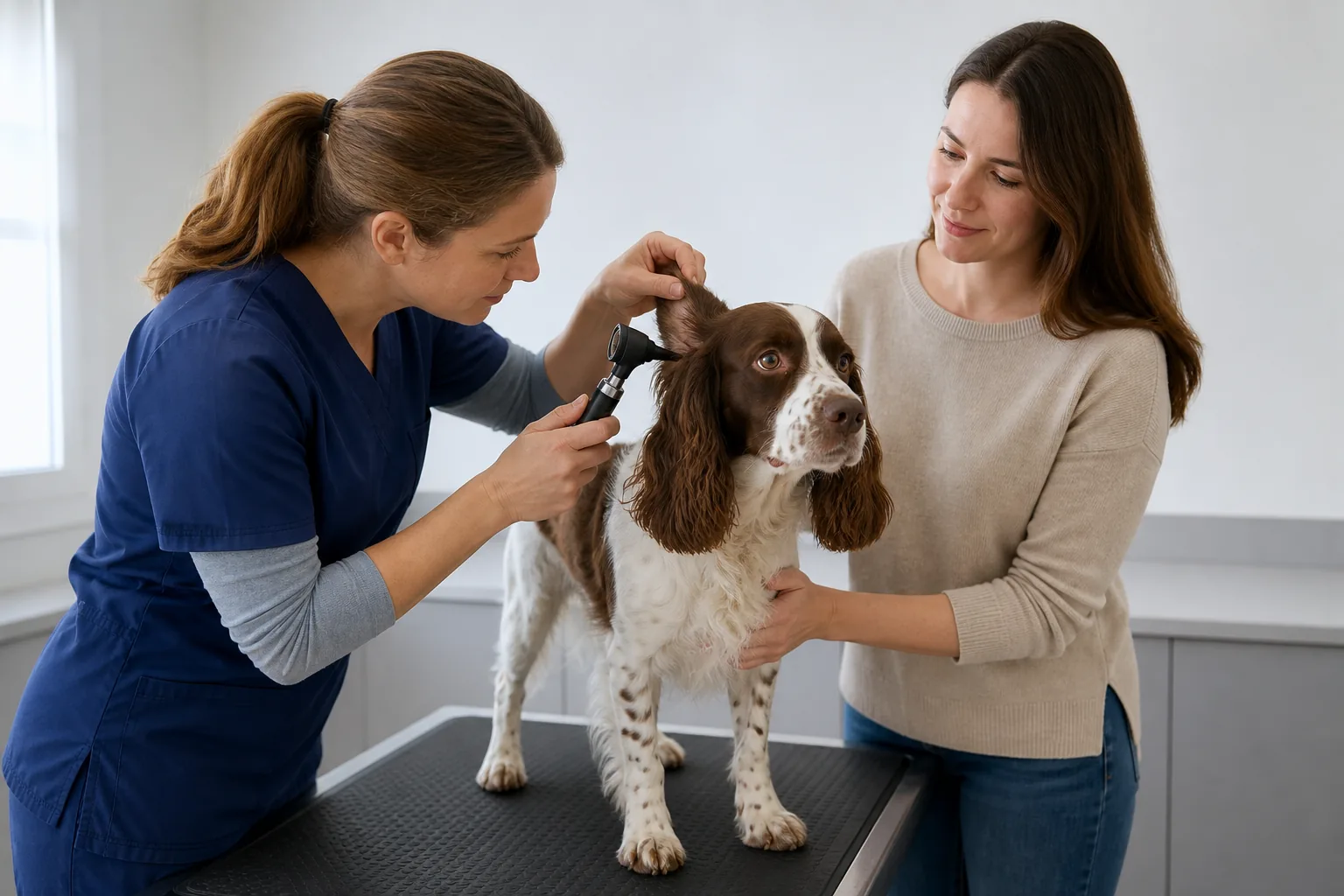
Before creating a schedule, ask your veterinarian to examine the ears, recommend a product for that dog, and demonstrate the technique. Follow the instructions on prescribed cleaners and medications even when they differ from general guidance here.
Know what you can and cannot see
The visible ear flap is the pinna. The external canal continues down and then inward; you cannot inspect its full length or reliably assess the eardrum at home. A veterinarian uses an otoscope and may examine material under a microscope to distinguish inflammation, bacteria, yeast, parasites, and other causes.
Color or discharge alone does not identify the cause. Dark material is not proof of mites. Odor is not a diagnosis of yeast. One-sided irritation can have a different explanation from recurrent disease in both ears. Treating by appearance risks choosing an ineffective or harmful product.
The eardrum matters because ingredients safe in an intact external canal may not be safe if it is damaged. An owner usually cannot confirm that it is intact. That is one reason painful, inflamed, neurologically abnormal, or heavily obstructed ears belong with a veterinarian.
Establish a healthy-ear baseline
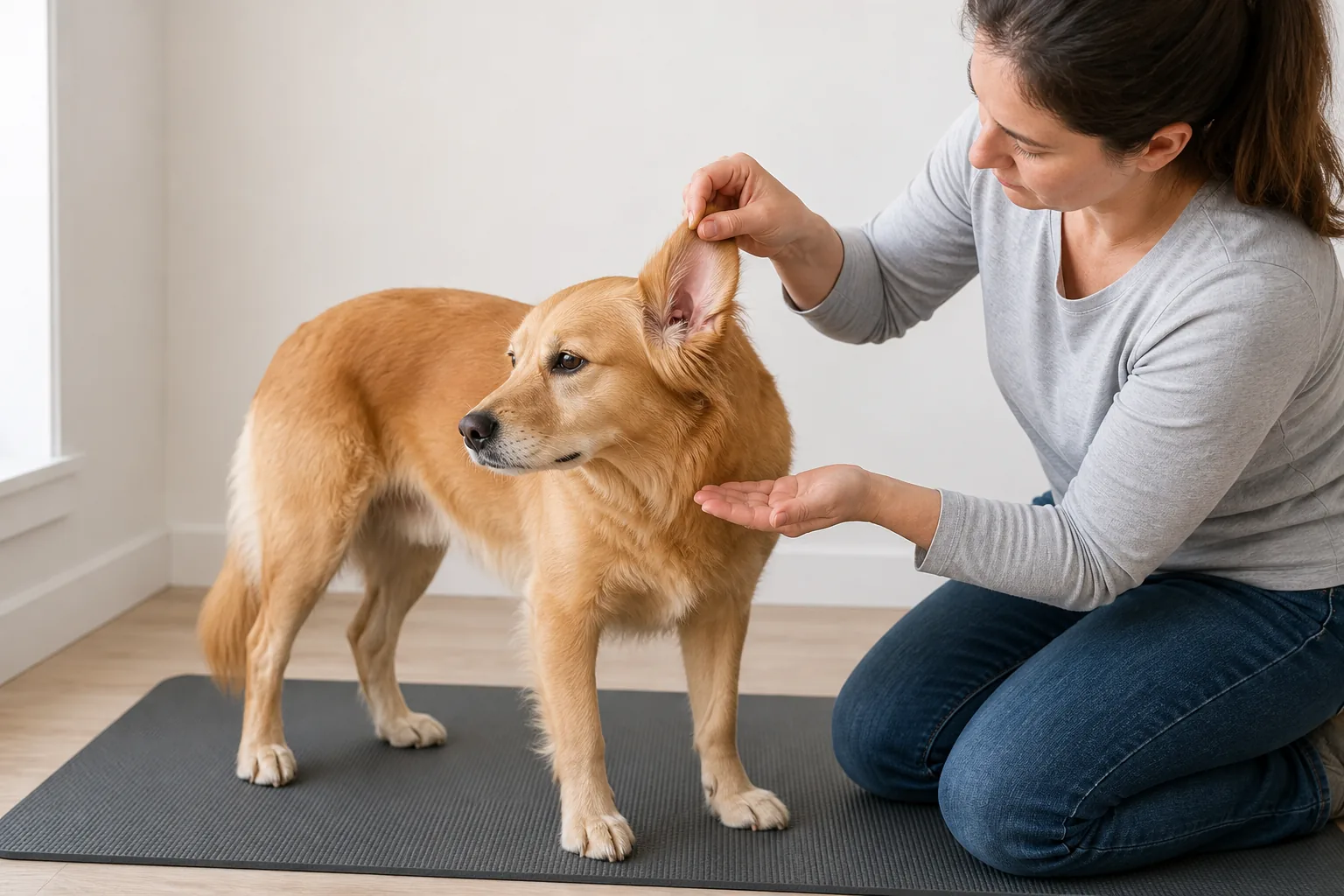
When the dog is relaxed, lift each ear flap gently and compare sides. A healthy ear typically is comfortable to touch, without marked redness, swelling, strong odor, heavy discharge, or persistent moisture. A small amount of wax can be normal.
Record what is ordinary for the individual:
- color and texture of visible skin
- usual amount and color of wax
- normal odor, if any
- comfort with light external touch
- recent swimming, bathing, or grooming
- the veterinarian’s recommended cleaning frequency and product
Check without probing. A weekly visual and odor check does not mean a weekly flush. The need for inspection and the need for cleaning are different.
Changes from baseline are more useful than a rigid internet standard. A dog who suddenly resists touch or shakes the head deserves attention even if the visible flap looks fairly normal.
Stop before cleaning when warning signs appear
Do not start a routine cleaning when an ear has:
- pain, crying, snapping, or sudden avoidance of touch
- marked redness, heat, swelling, sores, or bleeding
- strong, unusual, or foul odor
- yellow, green, bloody, pus-like, or heavy dark discharge
- repeated head shaking or scratching
- a swollen ear flap
- a suspected grass awn, foxtail, insect, or other object
- sudden onset after running through vegetation
- a history of a damaged eardrum or ear surgery without current instructions
Contact a veterinarian. Cleaning can remove diagnostic material, push an object deeper, cause pain, or introduce an inappropriate chemical into a damaged ear.
Loss of balance, circling, falling, head tilt, rapid abnormal eye movement, facial asymmetry, vomiting with vestibular signs, collapse, or severe pain requires prompt or emergency veterinary direction. Do not pour liquid into the ear while deciding what to do.
If the dog injures a person while resisting ear handling, separate safely and seek veterinary and qualified behavior support. Do not repeat the procedure to test whether the reaction was serious.
Ask the veterinarian how often this dog needs cleaning
There is no responsible universal calendar. Frequency depends on the dog’s ear health, product, treatment plan, activity, and underlying conditions. A clean, comfortable ear may not need cleaning. Over-cleaning can disturb the skin barrier and cause irritation.
A veterinarian may prescribe more frequent cleaning during treatment and a different maintenance schedule later. Do not continue the intensive phase indefinitely. Attend recommended rechecks; an ear can look improved before infection and inflammation have fully resolved.
Dogs with repeated infections need investigation of underlying and perpetuating factors, which can include allergies, canal changes, moisture, foreign material, or other disease. Cleaning harder does not solve every recurrence.
Swimming does not automatically mean every dog needs a full flush. Ask whether a veterinarian-approved drying product is appropriate. Prevent bath water from entering the canal, dry the outer flap, and monitor for change.
Use only the recommended product
Choose a canine ear-cleaning solution recommended by the veterinarian for this dog and situation. Confirm whether it is a routine cleanser, drying product, wax-dissolving cleanser, or medication. These are not interchangeable.
Avoid improvised mixtures and products not approved for the ear. Hydrogen peroxide, alcohol, essential oils, vinegar mixtures, human wax removers, powders, and other home remedies can irritate tissue or be inappropriate when the canal is inflamed or the eardrum is compromised. “Natural” does not establish safety.
Never use leftover prescription drops from another episode or another animal. Different conditions can look similar, medications expire, applicators become contaminated, and some ingredients require an intact eardrum.
Check the label and expiration date. Store as directed. If the product is cold and the instructions allow, warming the closed bottle in your hands may improve comfort; do not microwave it or heat it unpredictably.
Gather supplies before bringing the dog over
Prepare:
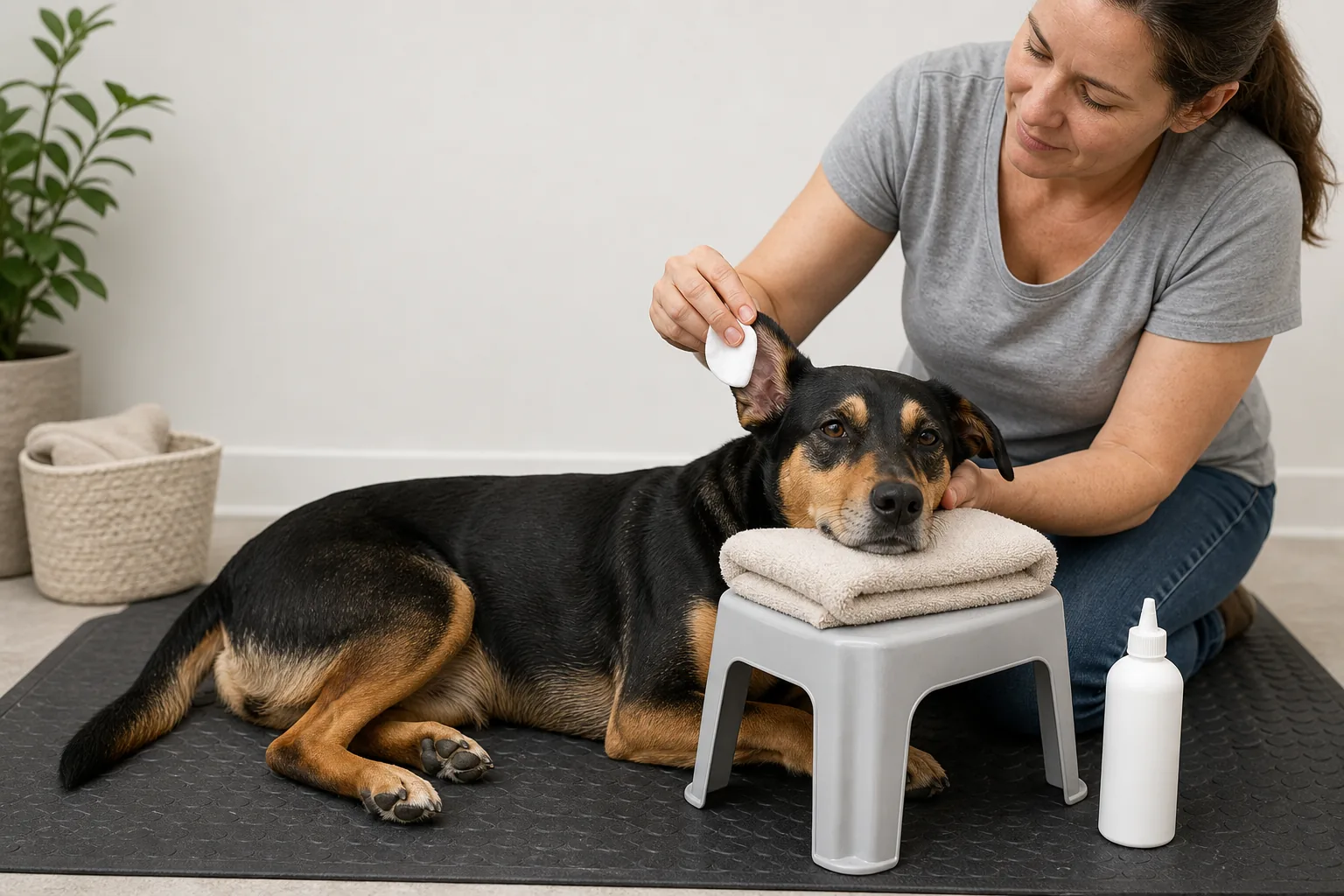
- the veterinarian-recommended cleaner
- cotton pads, cotton balls, or gauze as directed
- clean towels
- small rewards that fit the dog’s diet
- a nonslip surface
- good lighting
- any written veterinary instructions
Wear clothing that can get splashed. Choose an easy-to-clean space because a normal head shake distributes liquid and loosened debris.
Do not use cotton-tipped swabs, pointed tools, forceps, hairpins, or anything that can push debris deeper or injure the canal. Do not insert a finger or gauze farther than it can remain plainly visible and easily removed.
If multiple dogs are present, separate them so food rewards and post-cleaning excitement do not create conflict.
Prepare the dog through cooperative steps
A medically healthy ear can still belong to a dog who fears handling. Practice when no cleaning is planned:
- approach the usual care location, reward, and leave
- briefly touch the shoulder, reward, and stop
- touch the outside of the ear, reward, and stop
- lift the flap for one second, reward, and release
- show the closed bottle, reward, and put it away
- touch the bottle near the flap without dispensing, reward, and finish
Keep sessions under a minute initially. The dog should be able to move away. A chin rest or stationary mat behavior can become a start signal, but releasing that position must pause the procedure.
Food does not override discomfort. Stop if the dog freezes, turns away repeatedly, tucks the tail, pants unexpectedly, refuses or grabs food hard, struggles, growls, or attempts to bite. New resistance may indicate pain and warrants veterinary assessment.
Do not recruit several people to pin the dog down for routine care. Forced restraint can cause injury, worsen future handling, and hide a medical problem. A veterinary team can plan medication, handling modifications, or sedation when necessary.
Follow the demonstrated cleaning technique
The veterinarian’s product-specific directions take priority. A common routine for a comfortable, healthy ear is:
- Place the dog on a nonslip surface in a position that does not trap them.
- Lift the ear flap gently so the canal opening is visible.
- Hold the bottle above the opening without jamming the nozzle inside.
- Apply the amount directed by the veterinarian or label. Avoid touching the tip to skin or debris.
- Lower the flap and gently massage the base of the ear for the directed time. A soft squishing sound may be heard.
- Step back and allow the dog to shake the head in a safe area.
- Wipe loosened material only from the visible flap and entrance using gauze or cotton.
- Stop when the reachable area is clean enough; do not chase deep material.
- Reward the dog and let them leave.
Some dogs or medical plans use a cleaner-soaked cotton ball placed only at the opening and then removed after external massage. Use that approach only after a veterinary demonstration and ensure the material cannot be lost in the canal.
Never force liquid against resistance or pressure. Never continue if blood appears, the dog shows pain, or the canal seems blocked. Deep flushing is a veterinary procedure and may require pain control or anesthesia.
Keep the bottle clean
Do not let the applicator touch the ear. If it does, follow the manufacturer’s instructions for cleaning the tip; do not contaminate the bottle by wiping debris toward the opening. Never share a bottle between animals if contamination is possible.
Close the cap promptly. Check whether the product has a discard date after opening. A solution that changes color, consistency, or odor should not be used until the veterinarian or manufacturer confirms it is suitable.
Wash hands before and after care, especially when infection or parasites are suspected. Clean the work surface and launder towels. These hygiene steps do not replace diagnosis or treatment.
Coordinate cleaner and prescribed medication
If the veterinarian prescribes both cleaning and ear medication, ask:
- which goes first
- how long to wait between them
- how much of each to use
- whether both ears receive treatment
- how often and for how many days
- what to do after a missed dose
- which reaction requires stopping
- when the recheck is due
Do not assume medication should immediately follow cleaning. Product interactions and timing differ. Do not stop early because odor or discharge improves, and do not extend treatment without direction.
If the dog shakes out medication, do not automatically repeat the dose. Call the clinic for instructions to avoid overdosing.
Mark a calendar or treatment log after each dose. In a household with multiple caregivers, one shared record prevents accidental double treatment.
Know what can happen after an ordinary cleaning
A brief head shake immediately after solution enters the ear is expected. Some loosened wax may appear. The dog should then return toward normal comfort.
Contact the veterinarian if cleaning is followed by persistent shaking, scratching, redness, swelling, pain, bleeding, worsening odor or discharge, imbalance, head tilt, unusual eye movement, vomiting, facial change, collapse, or marked distress. Save the product and tell the clinic exactly what was used and when.
Do not add another substance to neutralize the first one. Do not flush repeatedly in an attempt to fix a reaction.
Handle common situations safely
The ear looks mildly waxy but comfortable
If the veterinarian has already confirmed a routine plan, use the approved cleanser and technique. If there is no established plan, ask before introducing a product, particularly for a puppy, a dog with prior ear disease, or a dog who resists handling.
The ear smells “yeasty”
Odor cannot identify the organism or underlying cause. Skip cosmetic cleaning and schedule an examination. The veterinarian may need a sample before the ear is cleaned.
Only one ear suddenly bothers the dog
A foreign object, localized trauma, or another one-sided problem is possible. Do not probe or flush blindly. Arrange veterinary assessment.
Both ears repeatedly become inflamed
Recurrent bilateral problems may require investigation beyond the ear itself. Follow the veterinarian’s diagnostic and long-term plan rather than rotating cleaners or foods independently.
The ear flap becomes puffy
Strong shaking or scratching can contribute to swelling of the flap. This is not ordinary wax buildup. Prevent further self-trauma as safely as possible and contact a veterinarian.
The dog swims often
Ask for an individualized post-swim plan. Dry the visible outer ear gently. Do not use a drying solution unless the veterinarian approves it for that dog and confirms when it should be withheld.
The dog has hair near or in the canal
Do not routinely pluck it based on breed advice alone. Hair removal can irritate tissue, and the decision depends on the individual ear and medical plan. A veterinarian or appropriately trained professional should advise and demonstrate any necessary trimming.
Avoid mistakes that turn hygiene into injury
Common preventable errors include:
- cleaning on a fixed schedule despite healthy, clean ears
- assuming discharge color identifies the cause
- using a human or homemade product
- inserting cotton swabs into the canal
- forcing the nozzle deeply into the opening
- contaminating the bottle tip
- continuing through pain, panic, or blood
- pouring cleaner into an ear with neurological signs or suspected eardrum damage
- using leftover medication
- skipping veterinary rechecks
- holding the dog down for repeated routine cleaning
The safest home cleaner is not the strongest one. It is the product the veterinarian selected for the dog’s current ear condition, used with correct technique and a clear stop rule.
Track patterns for recurrent problems
Maintain a short record of:
- which ear was affected
- date signs began
- swimming, bathing, grooming, or vegetation exposure
- itch, odor, discharge, pain, and head shaking
- skin or allergy changes elsewhere
- products and medications used
- veterinary findings
- response and recheck result
Photographs of the visible flap in ordinary lighting can document change, but never insert a camera or tool into the canal. A record helps the veterinarian distinguish a single event from a seasonal or recurrent pattern.
A practical decision path
Before cleaning, ask four questions:
- Is this ear comfortable, without inflammation, heavy discharge, strong odor, neurological signs, or suspected foreign material?
- Has a veterinarian recommended this specific product and frequency for this dog?
- Can the dog participate without force or escalating fear?
- Do I know exactly when to stop and whom to call?
If any answer is no, pause. An examination, demonstration, or revised handling plan is more useful than improvising.
Good ear care starts with restraint in the human sense
The purpose of routine cleaning is modest: maintain a healthy external ear according to an individualized veterinary plan. It is not a substitute for diagnosis and does not need to happen simply because a calendar says so.
Inspect gently, learn the dog’s baseline, use only the recommended solution, keep tools at the visible entrance, allow the head shake, and stop at pain or abnormal findings. Knowing when not to clean is the skill that protects the ear most.