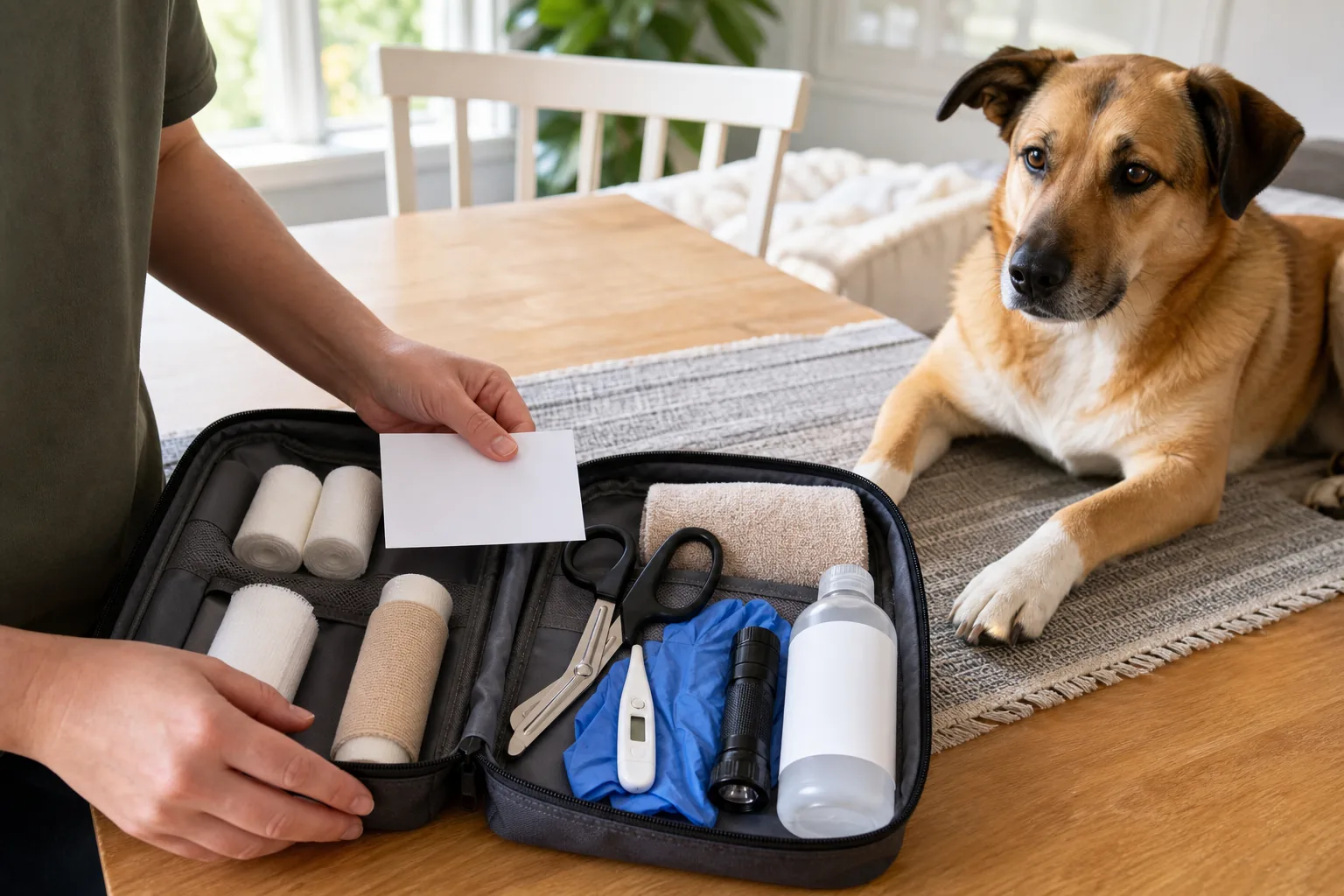

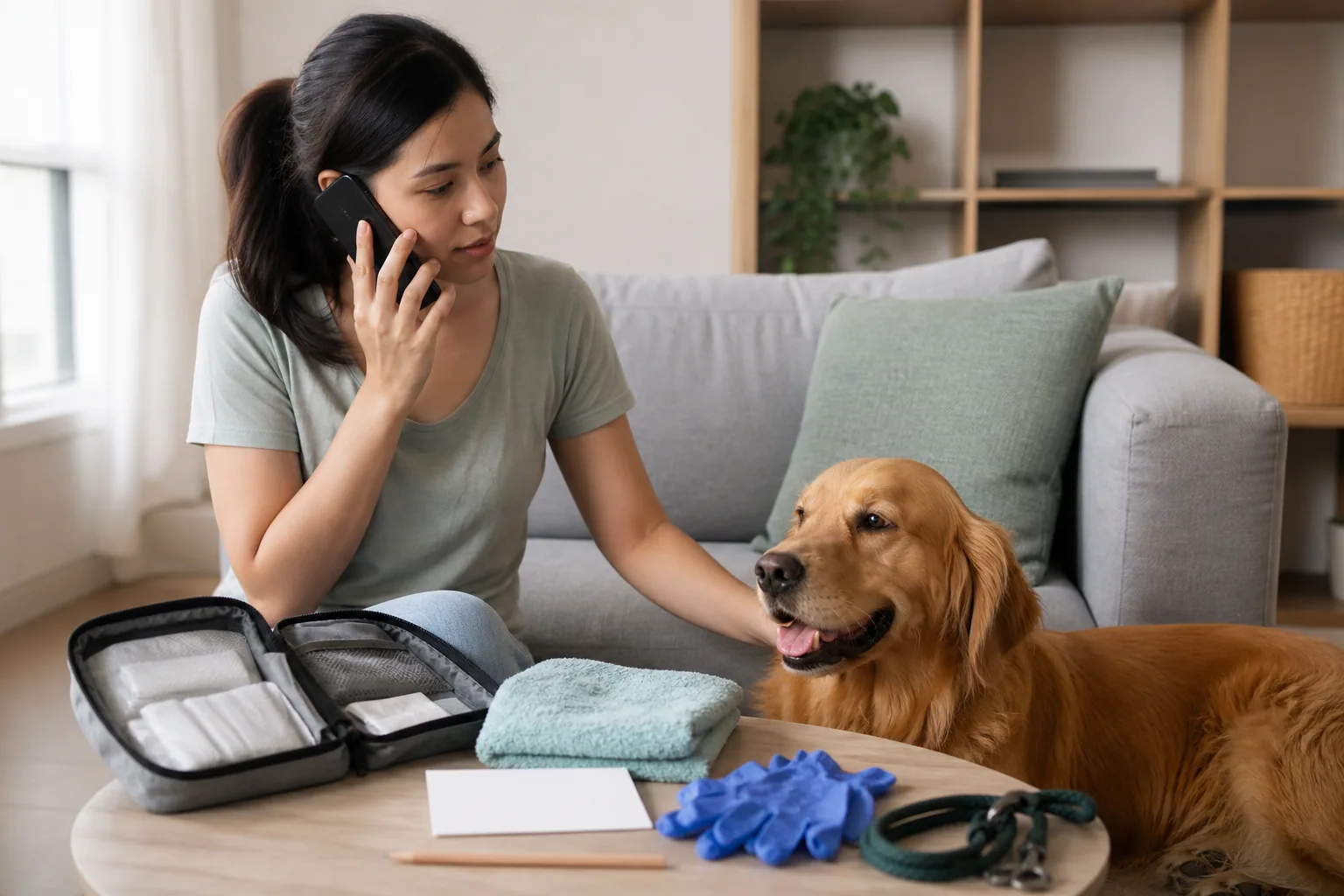
A dog first-aid kit should help you call, protect, stabilize, and transport. It should not encourage you to diagnose an emergency, give unapproved medication, induce vomiting, repair a wound, or delay veterinary care. The most valuable items may be a working phone, verified emergency-clinic details, a secure leash or carrier, and a plan for moving an injured dog safely.
Build the kit with your veterinarian because geography, travel, medical conditions, and the dog’s size change what belongs inside. Then learn how to use the supplies through a veterinarian-led or reputable pet first-aid course. Equipment without training can cause harm.
In an emergency, contact your veterinarian or the nearest emergency hospital while preparing to leave. If poisoning is possible, call a veterinarian or recognized animal poison-control service. Follow their instructions rather than searching for a home remedy.
Start with an emergency action card
Place a waterproof printed card inside the lid and store the same information in every caregiver’s phone:
- primary veterinary clinic name, phone, address, and hours
- nearest open emergency hospital and a backup
- route and estimated travel time
- recognized animal poison-control numbers and fee expectations
- owner and alternate-contact details
- dog’s name, photo, microchip number, species, breed/type, age, sex, and current weight
- major diagnoses, allergies, and handling or bite concerns
- current medications with strength, schedule, and prescribing clinic
- vaccination and relevant medical records
- insurance details if applicable
Verify clinic hours and routes every few months. A hospital that was open overnight last year may have changed service. Download directions or keep a paper map for areas with poor signal.
Write the dog’s current weight in both kilograms and pounds, but do not use it to calculate medication unless a veterinarian or poison specialist gives case-specific instructions.
Separate first aid from evacuation supplies
A compact first-aid pouch handles immediate stabilization and transport. A larger disaster kit supports evacuation or disrupted services. Keep them together or clearly linked, but do not overfill the first-aid pouch until urgent items are impossible to find.
The evacuation container may include several days of veterinarian-approved food and water, bowls, manual can opener, medications, copies of records, sanitation supplies, bedding, current identification photos, carrier, sturdy harness and leash, and instructions for a temporary caregiver.
Rotate food, water, and medication before expiration. Never stockpile prescription medicine outside the veterinarian’s directions, and do not expose temperature-sensitive medicine to a hot vehicle.
Use a visible, portable container
Choose a water-resistant, clearly labeled container that one adult can carry. Organize transparent pouches by purpose: contacts, wound covering, transport, protective equipment, and veterinarian-approved dog-specific items.
Keep one kit at home and a smaller travel version when the dog hikes, camps, or rides in a vehicle. Secure the vehicle kit so it cannot become a projectile or be chewed. A car reaches dangerous temperatures, so move heat-sensitive products as directed.
Every household member and pet sitter should know the location. Keep it above or behind a pet-proof barrier; gauze, medications, cold packs, adhesive, and packaging can become ingestion hazards.
Pack protective and visibility supplies
Include:
- several pairs of properly fitting disposable gloves
- a flashlight or headlamp with checked batteries
- spare batteries stored safely
- a clean towel or small blanket
- sealable bags for contaminated material or product packaging
- hand sanitizer for people, used away from open animal tissue
- pen and waterproof notepad
Gloves reduce contact with blood, vomit, chemicals, and other material, but they do not make handling risk-free. Wash exposed skin and seek human medical advice for a bite or significant exposure.
A headlamp frees both hands. Do not shine a bright beam directly into a conscious dog’s eyes or use a flame near oxygen, fur, chemicals, or dry vegetation.
Pack wound-covering supplies
A veterinarian may recommend:
- sterile nonstick pads
- sterile gauze pads in several sizes
- rolled gauze
- cohesive bandage material
- medical tape
- clean cloths or towels
- blunt-ended bandage scissors
- sterile saline wound or eye irrigation labeled for appropriate use
These supplies can cover a wound or support direct pressure during transport. They are not a substitute for wound exploration, closure, antibiotics, pain control, or assessment of deeper injury.
Do not place cotton directly in a wound where fibers may remain. Do not apply powders, ointments, alcohol, hydrogen peroxide, essential oils, glue, or household antiseptics unless the veterinarian specifically directs them for that event.
Cohesive wrap can tighten as tissue swells and compromise circulation. A veterinarian or first-aid instructor should demonstrate correct temporary bandaging. If you cannot monitor toes, warmth, swelling, and comfort, maintain direct pressure with clean material and transport rather than constructing a complex wrap.
Pack transport and restraint equipment
Include or keep beside the kit:
- a sturdy standard leash
- a well-fitted harness
- a secure carrier for a small dog
- a flat board or firm improvised stretcher plan for a large dog
- a blanket or towel to assist lifting
- a veterinarian-approved basket muzzle in the correct size, only if the dog has been positively conditioned
Pain and fear can make any dog bite. Move slowly, avoid the face, and keep people away from the mouth. A muzzle is unsafe for a dog who is vomiting, having breathing difficulty, unconscious, experiencing heat illness, or unable to tolerate it. Never tie the mouth closed.
Do not muzzle solely to continue painful home treatment. If restraint cannot be used safely, describe the situation to the emergency team and follow their directions.
Practice loading the carrier and moving an empty stretcher before an emergency. Never practice lifting an injured dog.
Consider monitoring tools only with training
A digital thermometer and water-based lubricant may appear on veterinary first-aid lists, but taking a rectal temperature can cause injury or a bite and may delay departure. Ask the veterinarian whether it belongs in your kit and obtain an in-person demonstration.
Do not rely on nose temperature or moisture. If the dog has collapse, breathing distress, heat exposure with illness, severe weakness, seizure, or altered consciousness, leave for care rather than spending time collecting a temperature.
A timer can help record seizure duration, breathing observations, or the start of direct pressure. Use the phone clock while another person calls and prepares transport.
Store only veterinarian-approved medication
The default kit should not contain human pain relievers. Ibuprofen, naproxen, aspirin, acetaminophen, and other human products can harm dogs, interact with prescriptions, worsen dehydration or shock, and delay correct treatment. A leftover veterinary drug prescribed for another dog or prior illness is also inappropriate.
If the veterinarian wants a particular prescription or over-the-counter product available for this individual, keep written directions stating the exact product, strength, indication, dose, route, expiration, and circumstances in which you must call before giving it. Reconfirm at routine visits.
Do not include medication based on a generic internet dose. Diphenhydramine, for example, comes in different formulations, may be combined with other ingredients, does not treat every allergic emergency, and may be unsafe for some dogs. Epinephrine, seizure rescue medicine, insulin, or other emergency prescriptions require a diagnosis and individualized training.
Store medicines in original labeled containers. Check expiration and temperature requirements. Keep them unreachable by pets and children.
Do not stock vomiting agents for unsupervised use
Never induce vomiting unless a veterinarian or recognized animal poison specialist instructs you for the specific dog, substance, amount, time, and clinical state. Vomiting can cause aspiration, repeat burns from corrosives, injury from sharp objects, or complications in a dog who is drowsy, seizing, breathing abnormally, or unable to protect the airway.
Do not give salt, mustard, oil, milk, charcoal, food, or another home remedy. Do not use hydrogen peroxide unless the professional managing the live case explicitly directs the exact product and amount. Calling first is part of first aid.
Save packaging, ingredient lists, pill strength, remaining quantity, photos, and approximate time of exposure. Transport them safely without exposing people or the dog again.
Recognize emergencies that bypass kit experimentation
Call and leave promptly for:
- breathing difficulty, blue/gray gums, or choking distress
- collapse, unresponsiveness, or profound weakness
- uncontrolled or severe bleeding
- major trauma, vehicle strike, or fall
- seizure lasting unusually long, repeated seizures, or failure to recover normally
- suspected poisoning or medication ingestion
- heat illness signs
- severe burns or electrical injury
- swollen abdomen with repeated unproductive retching
- eye trauma or chemical exposure
- penetrating chest or abdominal wound
- inability to urinate
- sudden paralysis, severe pain, or loss of balance
- difficult labor or another reproductive emergency
This list is not exhaustive. When uncertain, describe current breathing, consciousness, gum color, bleeding, and exposure to the veterinary team. A dog may have serious internal injury while appearing outwardly quiet.
Severe bleeding: pressure and transport
Keep yourself safe and call ahead. Place sterile gauze or a clean cloth over the wound and apply firm, steady direct pressure as instructed. If blood soaks through, do not repeatedly lift the first layer to check; add material over it while maintaining pressure.
Do not remove an embedded object. Stabilize around it without pushing and transport. Do not apply a tourniquet unless a veterinary professional directs you or you have specific hands-on training; incorrect placement can damage tissue.
Keep the dog warm without overheating and minimize movement. Pale gums, weakness, rapid breathing, collapse, or a distended abdomen can indicate shock or internal bleeding and require immediate care.
Breathing distress and choking
A conscious dog struggling to breathe may panic and bite. Do not put fingers blindly into the mouth or sweep for an object you cannot see. Do not pull on string, bone, or material that may be anchored.
Call the emergency hospital and follow live instructions. If an object is plainly visible and loose at the front of the mouth, the professional may guide removal, but pushing it deeper is a serious risk.
Pet CPR should be learned through a veterinarian-led or reputable practical course. Printed instructions cannot confirm arrest, teach hand placement for different body shapes, or provide feedback. If a dog is unconscious and not breathing normally, contact emergency services and follow their directions while transporting.
Burns and chemical exposure
Prevent further human exposure. Move away from heat, electricity, smoke, or chemical only when safe. Turn off power before touching an animal involved with an electrical source.
For a thermal or chemical event, call immediately and follow product- and injury-specific instructions. Do not apply ice, butter, oils, creams, powders, or adhesive dressings. Do not neutralize one chemical with another; reactions can release heat or fumes.
Bring the product label or safety information. Eye exposure and breathing problems are urgent. Even a small electrical mouth burn can have delayed complications.
Heat illness needs active veterinary guidance
Move the dog from heat, start transport, and contact the emergency hospital. Use the cooling method they advise while traveling. Do not wrap the dog in wet towels that trap heat, force water into the mouth, or use ice-water immersion without professional direction.
Heat illness can damage organs even if the dog seems to improve. Panting alone is not enough to grade severity. Weakness, altered consciousness, vomiting, diarrhea, abnormal gums, collapse, or seizures make the emergency clear.
Prevention belongs in the travel plan: water, shade, climate control, route timing, and never leaving the dog in a parked vehicle.
Seizures: create space and time the event
Move furniture or hazards only if safe. Dim stimulation, keep hands away from the mouth, and do not restrain the dog. Dogs do not swallow their tongues during seizures.
Start a timer and video from a safe distance if another person can do so without delaying care. Call the veterinarian, especially for a first seizure, prolonged event, clusters, suspected toxin, injury, pregnancy, diabetes, or abnormal recovery.
Give rescue medication only when prescribed for that dog and exactly as trained. Afterward, disorientation can create escape and bite risk; use barriers and quiet transport.
Eye injuries should not wait
Squinting, sudden cloudiness, bleeding, protrusion, a visible object, chemical exposure, severe redness, or inability to open an eye requires urgent veterinary advice. Prevent rubbing with a veterinarian-approved collar if safely available.
Do not remove an embedded object, use tweezers, apply human eye drops, or place pressure on the globe. Sterile saline may be appropriate for some surface contamination only when the professional directs it. Chemical labels matter.
Minor-looking wounds still need assessment
Bite punctures can seal over while deeper tissue is contaminated or damaged. Paw-pad cuts, torn nails, and small punctures can bleed, hurt, and become infected. Cover with clean material, prevent licking if safe, and ask the veterinarian how quickly the dog should be seen.
Do not let the dog walk on a suspected fracture or deep paw injury. Do not attempt to realign a limb or create a rigid splint without training; poor splinting can worsen pain and circulation.
An encounter with wildlife, another animal, or an unknown vaccination status also raises public-health and reporting questions. Avoid contact with saliva and call the veterinarian and relevant local authority.
Prepare for poison calls
Keep a template ready:
- dog’s weight, age, and health conditions
- product name and manufacturer
- active ingredients and concentration
- estimated amount exposed
- time and route: swallowed, skin, eye, or inhaled
- current signs
- medications already given
- packaging or photographs
Do not wait for symptoms. Some toxins cause delayed damage and early treatment matters. Poison-control services may charge a fee; keeping payment access ready prevents delay.
If the substance contaminated fur or paws, prevent licking and ask how to decontaminate. Gloves may be needed. Do not bathe an unstable dog or mix chemicals without direction.
Audit the kit every three months
Set a calendar reminder to:
- verify clinic numbers, locations, and hours
- test the flashlight and replace batteries safely
- check sterile packaging for damage
- replace expired products and prescribed medications through proper channels
- confirm the dog’s current weight, diagnoses, and medication list
- update photos and microchip details
- ensure the harness, muzzle, and carrier still fit
- replace chewed, wet, or contaminated equipment
- refresh caregiver instructions
- review the emergency transport plan
Do not discard medication into household trash or drains without checking local disposal advice. Ask the pharmacy or veterinarian about take-back options.
After any use, replace supplies immediately and document what happened. Contaminated reusable items need appropriate cleaning or disposal.
Practice the plan without staging danger
Run a calm household drill:
- One person finds the kit.
- Another opens the emergency card and calls a mock number.
- The dog voluntarily enters the carrier or approaches the vehicle.
- A person identifies the fastest route and backup.
- The family locates records and payment method.
- Everyone reviews who manages other animals and children.
Do not wrap the dog, take a rectal temperature, perform compressions, or simulate painful restraint for practice without trained instruction. Cooperative carrier and muzzle conditioning should happen separately with rewards.
Pet sitters need written authority, veterinary contacts, the dog’s handling risks, and a clear decision path. Confirm what the clinic requires for a caregiver to authorize treatment.
The kit’s job is to shorten time to appropriate care
A useful dog first-aid kit contains contact information, records, gloves, light, clean wound-covering materials, transport equipment, and only those dog-specific products a veterinarian has approved. It stays organized, current, portable, and inaccessible to pets.
Its success is not measured by how many treatments fit inside. Success is recognizing danger, avoiding harmful improvisation, protecting people, calling the right professional, providing limited stabilization when directed, and reaching veterinary care without preventable delay.