There is no single outdoor temperature that is safe for every dog or dangerous for every dog. Humidity, direct sun, shade, wind, surface temperature, exercise intensity, duration, water access, acclimatization, body shape, coat, age, weight, fitness, and medical condition all change risk. A mild-looking day can become dangerous inside a vehicle, during vigorous exercise, or for a dog who cannot pant effectively.
Heatstroke is a medical emergency. If a dog is showing heat-illness signs, stop the heat exposure, begin appropriate cooling, call the nearest veterinary hospital, and transport in a cooled, ventilated vehicle. Do not wait to see whether rest alone fixes it. Organ injury can progress after the dog appears cooler.
The best answer to “too hot” is therefore a decision process: assess the individual, reduce environmental load, watch early behavior and breathing, and stop before the dog loses the ability to compensate.
Understand how dogs lose heat
Dogs rely heavily on panting and heat exchange through respiratory surfaces. They sweat only to a limited degree through paw pads. When air is hot or humid, when breathing is restricted, or when muscles keep generating heat during exercise, panting may not dissipate enough.
Body temperature can rise from the environment, exertion, seizures, fever, and other causes. Heatstroke usually refers to dangerous hyperthermia associated with excessive heat or exercise rather than a regulated fever. An owner cannot safely distinguish every cause at home, and both can need urgent veterinary care.
Do not judge risk by touching the nose, ears, or coat. A dog’s surface may feel ordinary while core temperature and organ stress are rising. Taking a rectal temperature also should not delay cooling and transport, and it carries bite or injury risk without training.
Build an individual risk profile
Discuss summer safety with the veterinarian, especially when the dog has:
- a short or flattened muzzle
- noisy breathing or known airway disease
- heart or lung disease
- obesity or low fitness
- very young or advanced age
- a thick or dense coat
- neurological disease or seizures
- reduced mobility
- prior heat illness
- medication that may affect hydration, circulation, alertness, or temperature control
- recent illness, vomiting, diarrhea, or dehydration
Brachycephalic dogs may have less efficient airflow and can deteriorate quickly. A dog who pants noisily at rest, gags, turns blue or gray, collapses, or struggles to breathe needs veterinary assessment independent of the weather.
Prior heatstroke may increase future risk. Ask the treating veterinarian for a personalized activity and emergency plan.
Assess the complete environment
Check more than the forecast high:
- actual temperature at the dog’s location
- humidity or heat index
- direct sun versus moving shade
- wind and ventilation
- reflected heat from walls and buildings
- asphalt, concrete, sand, artificial turf, and vehicle surfaces
- route incline and distance from shelter
- access to potable water
- whether the dog can choose to stop
- duration and intensity of activity
- how quickly emergency care can be reached
A shaded breezy garden differs from a still enclosed courtyard at the same air temperature. Running produces more internal heat than slow sniffing. A dog carried to an event still may overheat while waiting on hot ground.
Weather can change during a walk. Plan the return leg, not just the outward conditions.
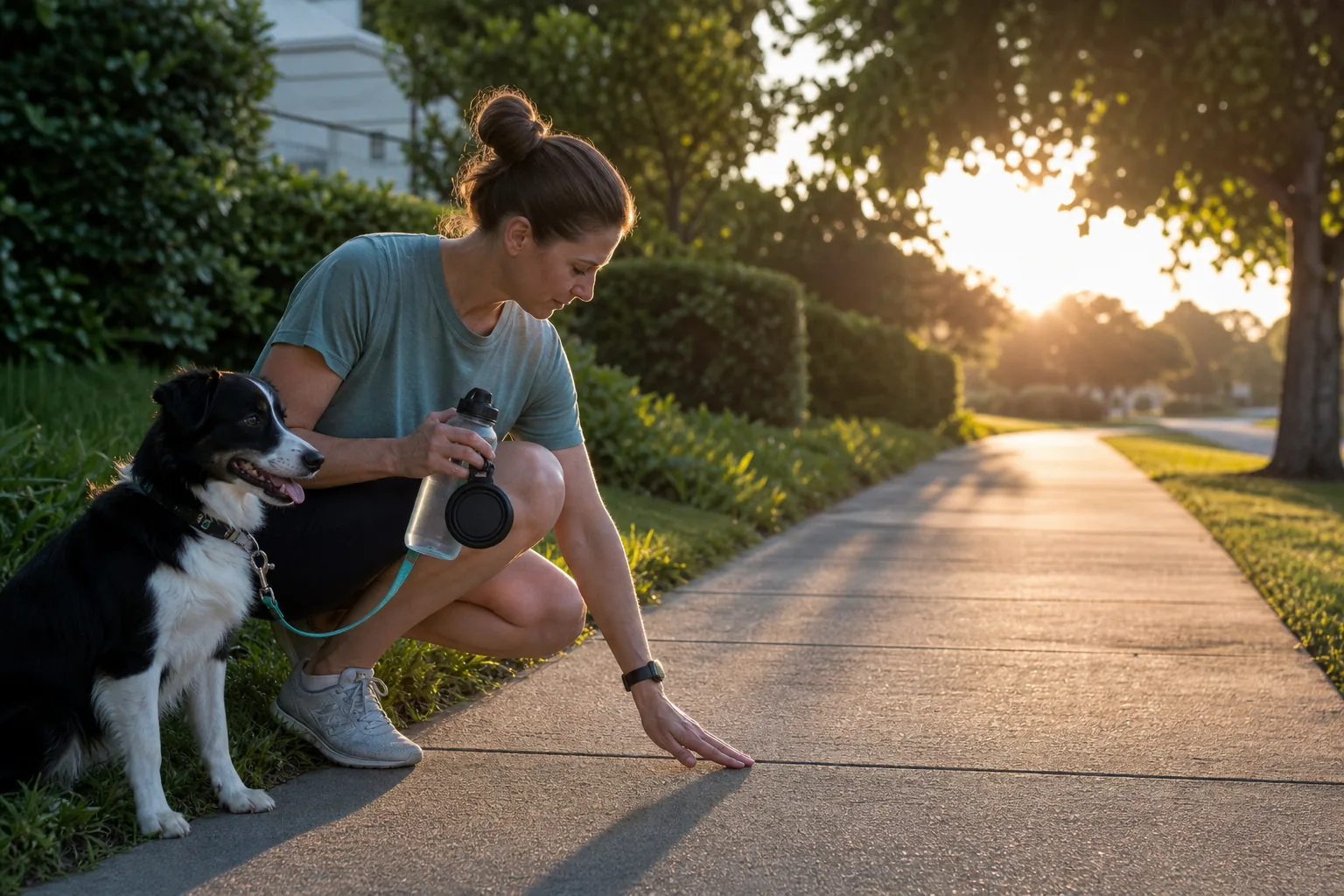
Do not use the hand-on-pavement test as the whole answer
Hot surfaces can burn paw pads and add heat load. Feel and observe the surface, choose grass or shade, and avoid peak sun. But a surface that seems tolerable to a hand does not prove that exercise is safe for the dog’s respiratory system or body temperature.
Watch for lifting paws, limping, rapid stepping, refusing to move, licking feet, or visible pad damage. Move to a cooler surface and contact a veterinarian for suspected burns. Do not apply ice, ointment, butter, or adhesive directly to damaged pads unless instructed.
Boots may protect from some surfaces but can add insulation, alter gait, rub, or reduce feedback. Condition them gradually and monitor fit and heat. They do not make a hot walk safe.
Schedule activity around the dog, not the calendar
On warm days, choose the coolest practical period, often early morning or later evening. Shorten distance, lower intensity, stay near home or a cooled vehicle that is running and supervised, and prioritize sniffing over continuous running.
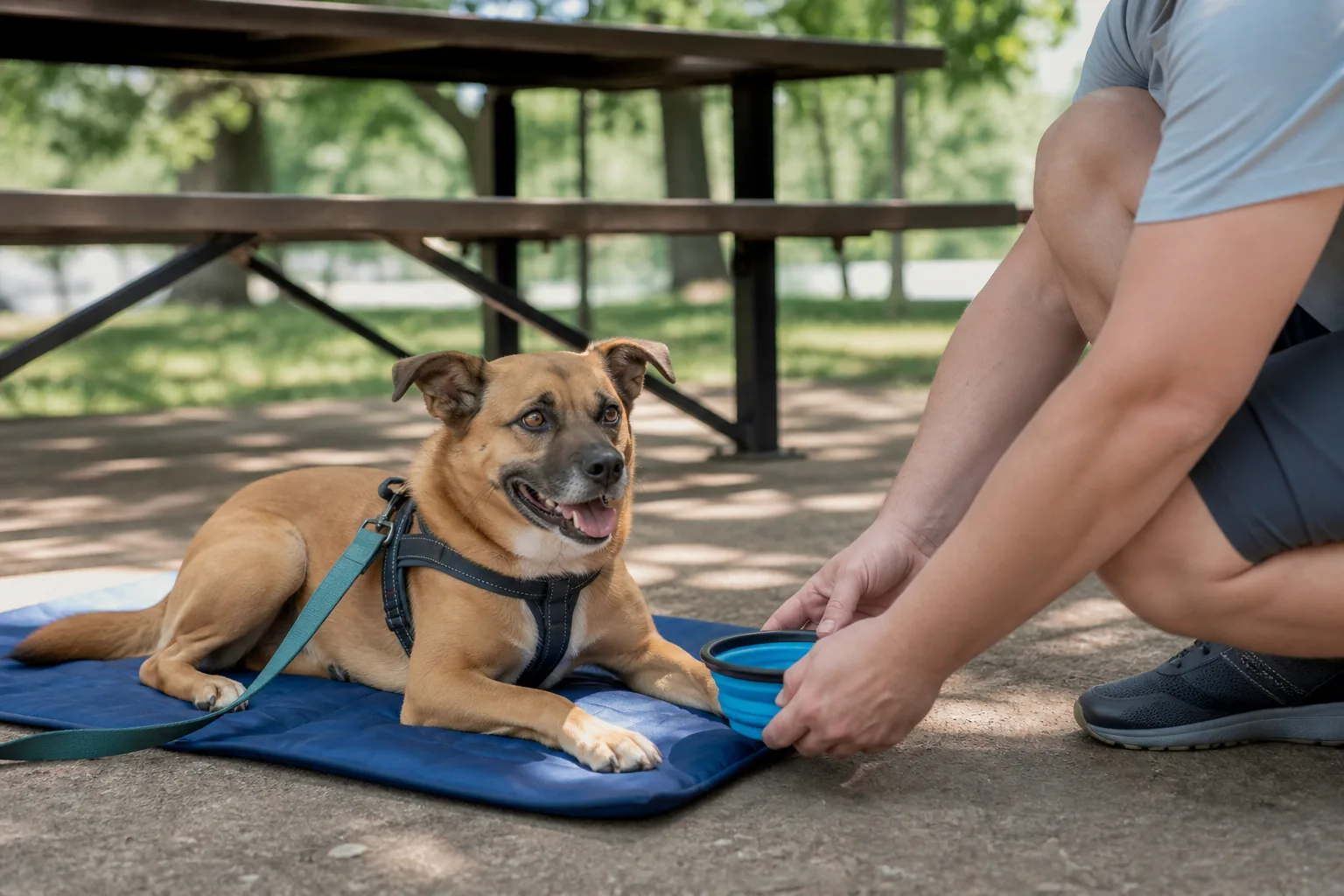
Carry water and offer breaks in shade. Do not force large volumes into a panting dog’s mouth. Avoid high-speed fetch, cycling, running, weight pulling, and intense sport when heat risk is elevated; motivated dogs may continue working after they should stop.
Acclimatization is gradual and never eliminates risk. A dog arriving from a cooler climate, returning after illness, or beginning a new activity needs conservative exposure. Fitness for winter exercise does not guarantee heat tolerance.
If safe outdoor exercise is not available, use indoor training, scent work, food puzzles, controlled play, or another suitable activity. Missing a walk is safer than gambling with heat illness.
Watch the dog from the first minutes
Know ordinary panting and movement for that individual. Early concern may include:
- panting that is heavier or noisier than expected
- seeking shade or lying down
- slowing, lagging, or refusing to continue
- repeatedly looking toward home or water
- increased drooling or thicker saliva
- a widened tongue
- restlessness or inability to settle
- reduced response to familiar cues
- unusual gum or tongue color
Stop at early change. Move to shade or cooling, offer access to water without forcing, and reassess. Do not tug the dog onward because the planned route is nearly finished.
More serious signs include weakness, stumbling, confusion, vomiting, diarrhea, collapse, abnormal bleeding or bruising, seizures, extreme respiratory effort, altered consciousness, or gums that are very red, pale, blue, gray, or otherwise abnormal. Begin emergency action immediately.
Panting can also signal pain, fear, heart/lung disease, fever, or another illness. Unexplained panting at rest warrants veterinary attention even without hot weather.
Use a simple pre-activity decision check
Before leaving, ask:
- Is this dog medically and physically suited to today’s conditions?
- Is the full route shaded, ventilated, and near an exit?
- Are surface, humidity, and direct sun acceptable?
- Is water available for drinking and cooling?
- Can the activity be shortened immediately?
- Is the dog already panting, tired, ill, dehydrated, or reluctant?
- Is safe transport and emergency care available?
If the plan depends on the dog tolerating “just ten more minutes,” choose a safer plan.
Never leave a dog in a parked vehicle
Vehicle interiors can heat rapidly even when outdoor air feels mild, windows are cracked, or the car is in shade. Shade moves, ventilation is inadequate, and mechanical climate control can fail.
Leaving air conditioning running is not a universal safety solution. Engines stop, systems malfunction, keys are taken, and bystanders cannot know whether the dog is safe. If the dog cannot accompany you, leave the dog in a safe climate-controlled location with a responsible caregiver.
During travel, secure the dog with appropriate restraint, maintain ventilation, monitor breathing and behavior, carry water, and plan breaks. Never place a crate where airflow is blocked or cargo traps heat around it.
If you see a distressed dog in a vehicle, call local emergency services or animal control and follow local law and dispatcher instructions. Do not take an action that delays professional response or creates additional danger.
Make home and garden safer
Provide continuous access to fresh water and a genuinely cool, ventilated resting area. Shade must remain available as the sun moves. An enclosed dog house can trap heat and is not automatically safe shade.
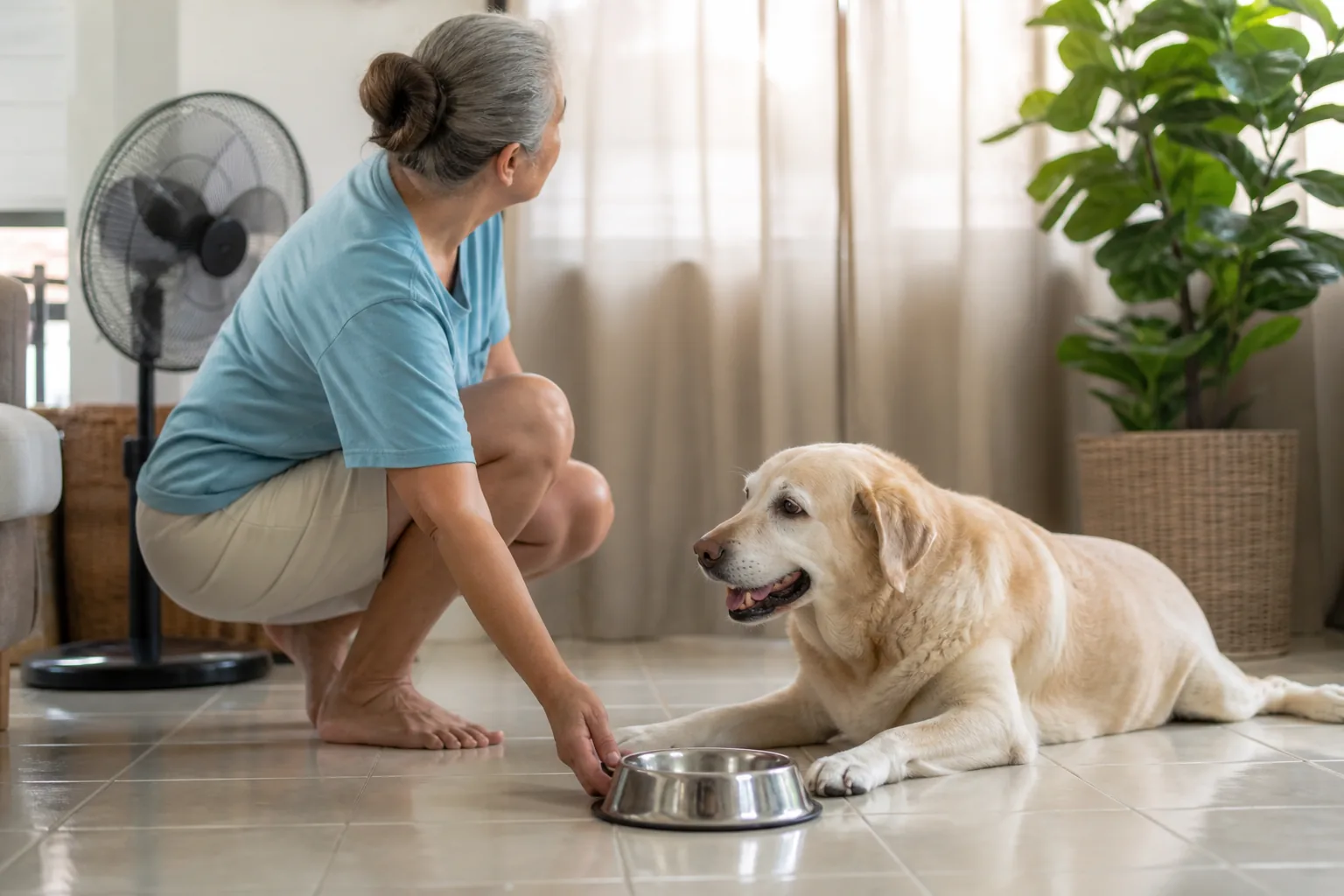
Indoors, use air conditioning when available or improve safe airflow with fans and ventilation. Fans assist evaporation but may not be enough in very hot, humid air. Monitor room temperature at the dog’s level.
Cooling mats, elevated beds, shallow supervised water, and frozen food enrichment may help some dogs, but they do not replace climate control. Check products for chewing, gel ingestion, entrapment, slipping, and temperature risk. Never force a dog onto a cooling item.
Dogs left outdoors cannot reliably self-manage if water tips, shade moves, fencing prevents airflow, or illness begins. Bring them into a safer environment.
Groom for coat health, not a generic summer shave
Regular brushing can remove loose undercoat and improve coat condition. Severe matting can impair airflow and hide skin disease. A veterinarian or qualified groomer can recommend an individual plan.
Do not shave every dog automatically. Coat types differ, clipping can expose skin to sun, and regrowth can be unpredictable. A haircut does not make intense heat safe.
Use only veterinarian-approved sunscreen on exposed areas when needed. Human products may contain ingredients unsafe if licked. Prevent sun exposure rather than relying only on a topical product.
Act immediately when heat illness is suspected
Stop further heating
End exercise. Move the dog out of the vehicle, sun, enclosed area, or hot surface. Enter shade or a cooled, ventilated space. Remove restrictive equipment that interferes with breathing, but maintain safe control.
Begin cooling
Use water cooler than the dog—not ice-cold—to wet the body as veterinary guidance recommends, while avoiding aspiration risk around the face. Combine water with moving air from a fan or air conditioning to support evaporation.
Do not wrap the dog in wet towels. A towel can warm and trap heat against the body. Do not use ice, ice water, rubbing alcohol, or extreme cold, which can impair heat loss or create additional injury.
An unconscious dog, a dog with breathing compromise, and a brachycephalic dog require especially careful airway handling. Do not submerge the head or force water into the mouth.
Call and transport
Call the emergency hospital while cooling begins and follow their live instructions. Transport in a cooled, well-ventilated vehicle. Continue the method they recommend en route without delaying departure.
Veterinary examination is still necessary if the dog looks better. Heat injury can affect the brain, kidneys, gastrointestinal tract, liver, clotting system, and other organs, with complications appearing later.
Avoid dangerous cooling myths
“Cold is faster, so ice is better”
Extreme cold is not recommended. Controlled cooling with appropriate water and airflow is safer. Ice also risks skin injury and can make handling more difficult.
“Wet towels keep the dog cool”
Leaving wet towels wrapped around the body can trap heat as they warm. Flowing or repeatedly applied appropriate water plus air movement is different from insulation.
“The dog drank, so the danger has passed”
Drinking does not rule out heatstroke or organ damage. Do not force water into a dog who is confused, vomiting, collapsing, or breathing hard.
“A rectal temperature tells me whether to go”
Clinical signs and exposure can justify emergency care before a temperature is obtained. Measurement can delay cooling, produce error, or cause a bite. If a veterinary professional asks for it and you are trained, use the advised technique without delaying transport.
“The dog stopped panting, so cooling worked”
A severely affected dog may stop effective panting because of exhaustion, airway failure, altered consciousness, or collapse. Reduced noise is not necessarily recovery.
Protect high-risk dogs more conservatively
Flat-faced dogs
Shortened airways may reduce efficient panting. Avoid heat and strenuous exertion well before other dogs show difficulty. Noisy breathing, gagging, blue/gray color, collapse, or marked effort is an emergency.
Puppies and senior dogs
Temperature regulation, mobility, judgment, and underlying disease may limit tolerance. Use short controlled outings and dependable indoor cooling.
Overweight dogs
Extra body fat can impair heat loss and increase effort. Weight management should be veterinarian-guided; do not attempt to accelerate it with hard exercise in heat.
Dogs with heart, lung, or neurological disease
Ask the veterinarian for explicit activity, medication, and emergency advice. Do not change medication or fluid intake without direction.
Working and sport dogs
Drive and conditioning can mask voluntary stopping. Use planned work-rest cycles, objective observation, shade, water, and a handler empowered to cancel activity. Competition schedules do not override welfare.
Plan around humidity and overnight heat
High humidity reduces evaporation from panting, so an air temperature that was manageable in dry conditions may be unsafe. Still air and direct sun add load. Night can remain humid and hot even after the sun sets.
Weather apps describe regional conditions, not the exact pavement, enclosed yard, stadium, or trail. Use them as one input. A dog’s response is the final stop signal, not proof that conditions were safe in advance.
After several hot days, buildings and surfaces retain heat. Check indoor sleeping areas and vehicle cargo spaces rather than assuming darkness brings relief.
Record a heat incident for follow-up
After emergency care, document:
- location and weather
- sun, humidity, surface, and ventilation
- activity and duration
- first sign and when it appeared
- cooling method and start time
- transport time
- medications or other first aid given
- veterinary findings and discharge plan
Follow every recheck and activity restriction. Ask whether the dog now has greater future risk and what specific prevention thresholds apply.
Do not interpret survival as evidence the exposure was acceptable. Use the event to remove the failure point.
Create a household hot-weather plan
Assign responsibilities:
- who checks forecasts and local conditions
- who carries water
- who controls walk timing and cancellation
- where the dog rests during a power outage
- which cooled destination accepts dogs
- how to transport without a working vehicle
- which emergency hospital is open
- who manages other animals and children during an emergency
Keep the first-aid and evacuation kit current. During an outage or evacuation, prioritize ventilation, shade, water, and early relocation rather than waiting for the dog to show illness.
Pet sitters and walkers need written restrictions. “Use your judgment” is less protective than “no midday walk; provide a brief toilet break in shade and return indoors.”
Safer decisions begin before panting becomes distress
There is no trustworthy universal cutoff because heat risk belongs to an interaction between dog, environment, and activity. Screen the individual, examine humidity and surfaces, lower exertion, provide water and real cooling, and give the dog an immediate exit.
Stop at early change. If heat illness is suspected, stop heating, cool appropriately, call, and transport. Do not use ice, wrap in wet towels, force water, or wait for a number on a thermometer. Prevention is flexible; the emergency response is not.