The first week with an adopted dog is not an audition for the rest of the dog’s life. A quiet dog may be overwhelmed rather than naturally calm. A restless dog may be reacting to unfamiliar sounds, interrupted sleep, transport, confinement history, or the sudden loss of everything predictable. Behavior observed in a shelter, foster home, or first evening provides useful information, but it is not a permanent personality verdict.
Your job during the first week is to reduce preventable risk and make daily events easy to predict. Secure transport, limit the initial space, preserve the known food when possible, establish a toileting rhythm, allow voluntary contact, and postpone crowded introductions. Reward behavior you want to see; do not test the dog with situations that would be difficult even after months at home.
Popular “3-3-3” descriptions suggest milestones at three days, three weeks, and three months. They can remind people that adjustment takes time, but they are not a biological schedule or guarantee. Some dogs explore immediately; others need far longer. Judge progress through the individual dog’s eating, sleeping, elimination, movement, body language, recovery from small surprises, and willingness to engage.
Before pickup: gather facts, not a perfect story
Ask the shelter, rescue, or foster for all available records:
- veterinary examinations, vaccines, parasite control, tests, surgery, and medication
- microchip number and registration process
- current food, measured amount, meal times, treats, and known reactions
- toileting schedule and surface preference
- sleeping and confinement routine
- walking equipment used and known escape behavior
- responses to adults, children, dogs, cats, handling, vehicles, and being alone
- cues, rewards, and games already familiar
- observed fear, guarding, reactivity, bite history, or separation distress
- upcoming rechecks and adoption-support contact
Unknown history is common. Do not fill gaps with invented trauma or assume a behavior proves abuse. “Dog freezes when a hand reaches over the head” is actionable. “Previous owner must have hit him” is speculation that can distort the plan.
Keep copies of the adoption contract and medical records. Confirm what support or return-to-rescue process exists before a crisis. Asking early does not mean expecting failure; it creates a safety net.
Prepare one manageable home zone
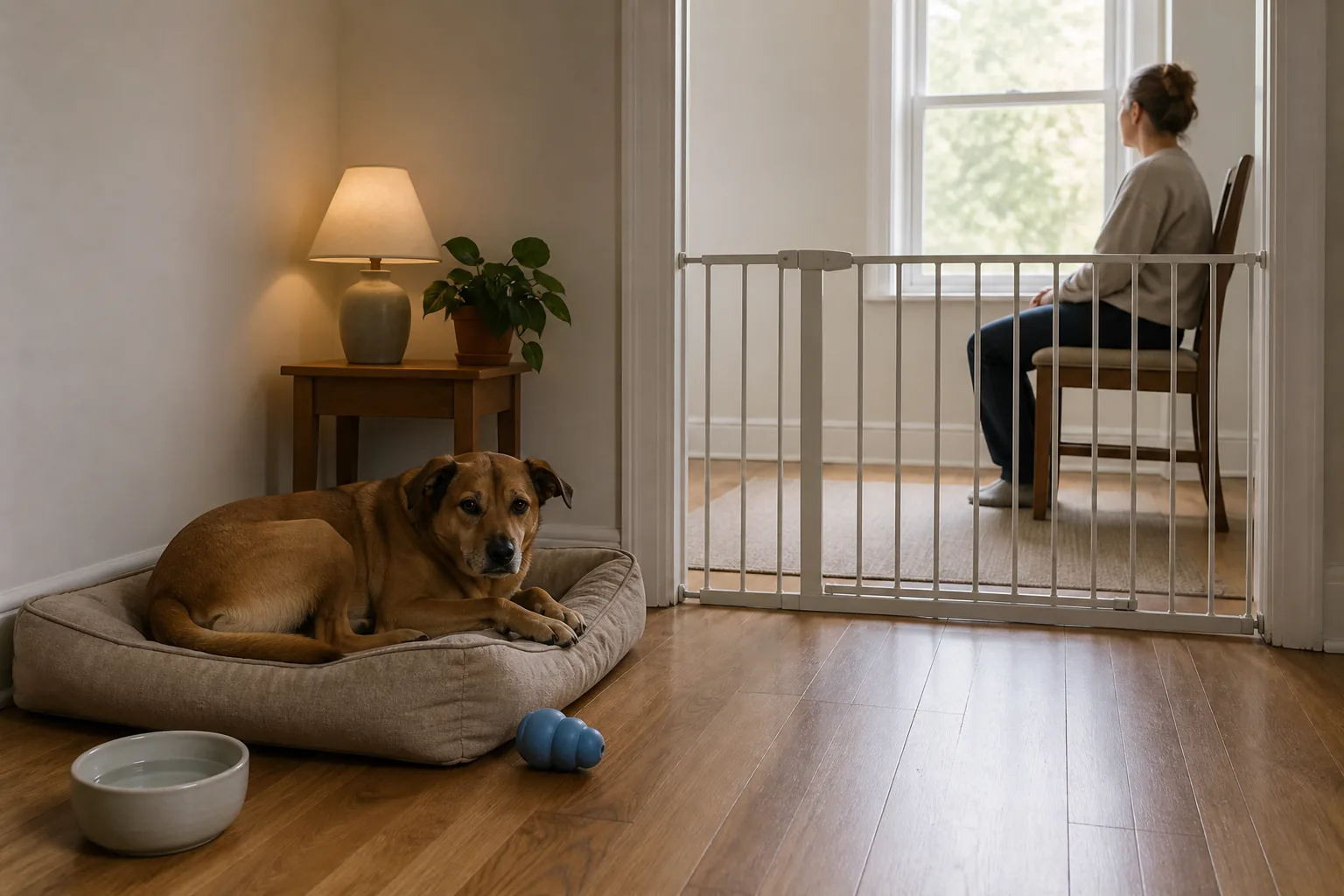
Choose a quiet area with a washable nonslip floor or rugs, water, a bed, and safe resting options. Use gates or closed doors to reduce access rather than giving the entire home immediately. Remove medication, food, trash, cords, cleaners, toxic plants, children’s toys, laundry, sharp objects, and chewable hazards.
A crate may be included only if the dog already enters and rests there comfortably or you introduce it gradually as an optional positive space. Do not shut a distressed dog inside because crates are supposed to feel like dens. A gated room or exercise pen may be a better starting environment. Whichever setup you use must allow comfortable standing, turning, resting, access to water as appropriate, and safe temperature.
Place the bed away from traffic so people do not need to step over the dog. Establish a household rule: a resting dog is left alone. Children should never climb on, hug, corner, wake, or take an item from the new dog.
Make escape prevention redundant
Newly adopted dogs can slip collars, push through doors, climb fences, or bolt after a fright. Do not rely on recall, attachment, or a single clip during the first week.
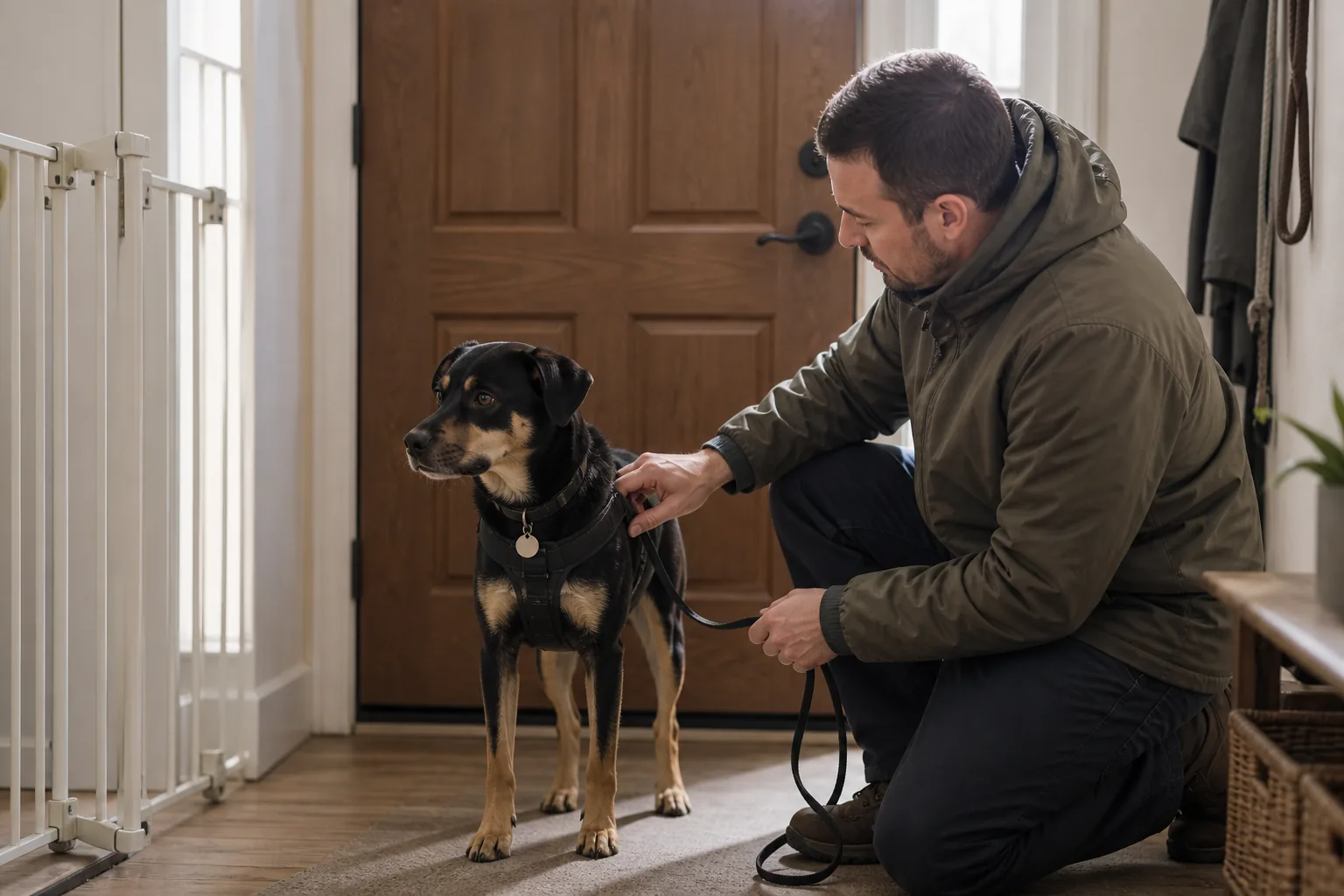
Before pickup, fit secure humane walking equipment based on the dog and the organization’s guidance. A properly fitted harness and collar with separate secure attachment or backup connector may provide redundancy for a flight-risk dog. Equipment must not restrict breathing or movement, chafe, or depend on pain. Check fit each outing because weight, coat, and posture affect it.
Attach current identification and complete microchip registration promptly. Keep exterior doors and gates closed before moving the dog. Use an airlock routine: dog is secured before the door opens; door closes before equipment comes off. Tell visitors not to open entrances.
Inspect fencing at dog height for gaps, loose boards, climbable objects, and spaces below gates. Supervise the yard on leash until escape risk and behavior are understood. A fenced yard is not proof that the dog can safely be left alone.
Transport directly and quietly
Use a secured travel crate or an appropriate vehicle-restraint system. Do not let the dog ride loose, sit on the driver, or exit directly into an open parking area. Confirm restraint setup before opening the shelter door.
Drive home rather than stopping at a pet shop, dog park, café, or relatives’ homes. The dog has already experienced a major transition. Keep voices and music low and the cabin at a safe temperature. If vomiting, breathing difficulty, collapse, injury, or severe distress occurs, contact veterinary care.
At home, close exterior doors and bring the dog to the toileting area on secure equipment. Then enter the prepared zone. Allow sniffing without a crowd leaning in.
The first hours: lower social pressure
Offer water and show the resting area. Provide the known food at the known time when practical. Do not surround the dog, pass the leash from person to person, or insist on photographs, cuddling, grooming, and play.
Sit sideways at a comfortable distance. Avoid prolonged staring and reaching over the head. Let the dog approach and move away. If contact is invited, briefly touch the shoulder or chest, then pause. Continuing approach suggests consent to another short interaction; turning away, freezing, lip licking, ducking, moving off, or stiffness means stop.
Affection is not owed to strangers, even kind ones. Trust grows when withdrawal works.
Build a simple predictable routine
For the first several days, keep the timetable boring and repeatable:
- wake and toileting trip
- measured meal
- quiet rest
- short low-traffic walk or yard outing
- another rest period
- one brief reward-based skill or enrichment activity
- evening meal and toileting
- calm final outing and sleep
The exact times should suit the dog and household. Predictability matters more than a fashionable schedule. Puppies, seniors, medically affected dogs, and dogs after surgery may need different frequency and activity.
Protect sleep. A dog who startles awake repeatedly cannot recover well. Keep guests, loud entertainment, and constant handling away from the resting zone.
Keep the known diet stable
Continue the food and amount supplied by the shelter or foster unless a veterinarian directs otherwise. Sudden diet change, rich welcome treats, table scraps, and stress can all affect the digestive tract. If a switch is necessary, follow an appropriate measured transition unless a recall, product concern, allergy trial, or medical instruction requires another approach.
Measure intake. Appetite may be reduced briefly in a stressful setting, but refusal is not automatically emotional. Contact a veterinarian promptly for a puppy, diabetic or medically vulnerable dog; pain while eating; vomiting, regurgitation, diarrhea, lethargy, dehydration concerns; or persistent/unexplained appetite loss.
Use tiny rewards from the daily food allowance when possible. Avoid unfamiliar chews that can splinter, obstruct, damage teeth, or trigger guarding. Supervise enrichment and remove damaged items.
Prevent toileting mistakes rather than punishing them
Take the dog to the same suitable outdoor area after waking, eating, drinking heavily, play, and before bed, plus additional trips based on age and history. Keep the outing calm. When elimination occurs, mark softly and reward immediately outdoors. Returning inside before rewarding makes the connection less clear.
Supervise indoors or use the prepared safe area. Watch for sniffing, circling, pacing, or moving toward an exit. If an accident occurs, clean with an appropriate enzymatic product. Do not shout, rub the dog’s nose in it, drag the dog to the spot, or punish after the fact. Punishment can teach hiding, not the desired location.
Record times to discover a pattern. Sudden frequency, straining, blood, pain, inability to urinate, diarrhea, excessive thirst, or repeated accidents despite frequent access may be medical.
Walking: prioritize safety over mileage
The first walks should be short, quiet, and close to home unless the dog’s foster team recommends a familiar alternative. Choose times with low pedestrian and dog traffic. Allow sniffing and avoid forced greetings.
Do not visit dog parks. Vaccination and parasite status, play style, recall, and response under pressure may not yet be known. An overwhelming encounter can create risk for every dog involved.
Maintain distance from barking dogs, traffic, children running, wheeled equipment, or anything that causes freezing, pulling away, crouching, frantic scanning, lunging, or inability to take food. Distance is a training tool, not defeat. Turn and leave before the dog is trapped.
Do not test off-leash recall in an unfenced area. A dog following closely inside does not yet have a reliable relationship or cue under outdoor distraction.
Introduce household members one at a time
Adults should enter calmly, turn slightly sideways, avoid looming, and allow the dog to choose approach. Tossing a treat away from the body can relieve social pressure because the dog can eat while gaining distance. Do not lure a fearful dog into touching range and then reach.
Children require active adult supervision and physical separation when supervision is not possible. Teach them to leave the dog alone during eating, sleeping, chewing, hiding, or when the dog moves away. No face-to-face contact, hugging, riding, chasing, or taking objects.
A dog who growls is communicating discomfort. Increase distance and change the setup. Punishing the warning can remove useful information while fear remains.
Introduce resident dogs gradually
Do not place unfamiliar dogs together in a small room and “let them work it out.” Begin with separated living zones, separate food, water, beds, toys, and chews. Prevent access through barriers that allows staring or fence fighting.
When both dogs are medically appropriate and handlers can manage safely, a parallel walk on neutral or low-pressure ground may allow observation at distance. Keep leashes loose enough to avoid forced face-to-face tension. Reward calm checking-in and increase distance for stiffness, hard staring, freezing, raised arousal, avoidance, growling, or lunging.
Short successful exposure is enough. Return to separation and rest. Indoor time should begin only when both dogs show relaxed behavior, with resources removed and adults ready to separate calmly. Some pairings require a qualified professional from the start, especially with bite history, size mismatch, guarding, or intense arousal.
Cats and small animals need physical protection
Use closed doors and secure barriers. The dog should not rehearse chasing, stalking, or crashing into a gate. Provide the cat elevated escape routes, separate resources, and dog-free areas. Scent exchange and very brief visual exposure at a safe distance may precede closer work.
Do not hold a cat near the dog or assume a wagging tail means safety. Predatory behavior can be quiet. If the dog fixates, stalks, trembles, vocalizes intensely, or cannot disengage, separate completely and seek expert help. Some dogs cannot safely share a home with small animals.
Start alone-time information carefully
Avoid swinging from constant company to a full workday without preparation. At the same time, do not assume the dog should never be alone during the first week if ordinary life will require it. Build information in tiny safe steps.
After toileting and when the dog is calm, step behind a gate or out of sight for a few seconds, then return before distress. A camera can show pacing, panting, drooling, vocalizing, escape attempts, freezing, or inability to eat. Increase time only when the dog remains relaxed.
If distress begins immediately or escalates, do not repeat longer absences to force adaptation. Arrange temporary support and contact a veterinarian or qualified separation specialist. Destructive escape can cause serious injury.
Crating is not a treatment for separation anxiety. A panicking dog may damage teeth, nails, or body trying to escape.
Teach only what improves the week
Use one- to three-minute reward-based sessions. Useful first skills include:
- name predicts orientation
- hand target
- finding a tossed food piece
- voluntarily going to a mat
- calm harness and leash handling
- trading a low-value toy
Mark the desired moment and reward immediately. The AVSAB guidance for newly adopted dogs emphasizes noticing and reinforcing behavior people like, including outdoor toileting and calm choices. Do not wait for mistakes and then punish.
Skip formal drilling when the dog is tired or overwhelmed. Eating, sleeping, toileting, exploring, and learning the routine are already substantial work.
Manage chewing and household behavior
Assume the dog does not know which objects belong to people. Remove shoes, remotes, laundry, rubbish, food, and children’s toys. Offer a small selection of safe dog items suited to chewing style and supervise.
When the dog chooses an appropriate item, quietly reinforce. If the dog has something unsafe, avoid chasing or grabbing. Use barriers or a practiced trade when safe. For dangerous ingestion or guarding, manage distance and obtain professional guidance.
Do not interpret counter surfing, jumping, barking, or chewing as spite. Prevent rehearsal and reinforce an alternative. A gate preventing kitchen access is often more effective than correcting the dog twenty times.
Schedule veterinary follow-up
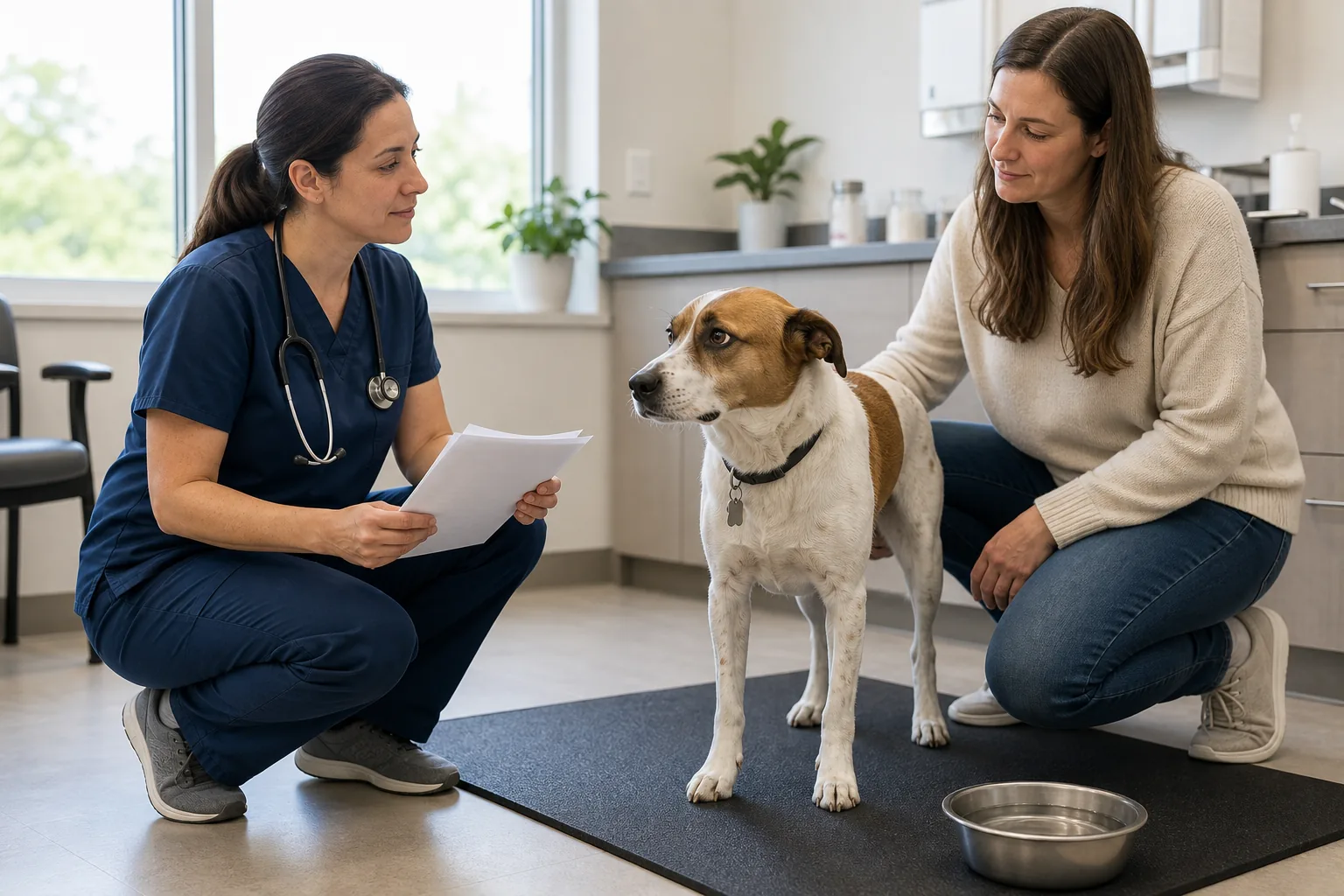
Arrange an initial veterinary appointment according to the adoption organization’s instructions and the dog’s medical needs. Bring every record, medication, microchip detail, diet label, and a list of observed signs. Ask about vaccines, parasite prevention, infectious-disease testing, dental health, weight and body condition, reproductive status, and follow-up care.
Use a low-stress arrival plan. Tell the clinic about fear, handling concerns, or bite history before the visit. Wait outside or in the car if the clinic offers that option; use secure equipment and high-value rewards when appropriate. Pre-visit medication must be prescribed for the individual dog.
Seek care sooner for vomiting, persistent diarrhea, appetite loss, coughing, nasal discharge, difficulty breathing, pain, inability to urinate, wounds, marked lethargy, collapse, seizure, toxin or foreign-object exposure, or rapid behavior change.
What not to schedule in week one
Unless necessary for health or safety, postpone:
- a welcome party
- dog parks or daycare
- crowded stores and patios
- a sequence of family visits
- grooming that requires force
- long car tours
- off-leash outings
- deliberate exposure to feared stimuli
- leaving unfamiliar dogs together unsupervised
- testing food or toy guarding
Socialization does not mean flooding. Carefully chosen positive exposure at a comfortable intensity is different from forcing contact.
Keep a seven-day observation record
Use simple facts:
| Area | Record | | --- | --- | | Food and water | amount offered, amount consumed, changes | | Elimination | time, place, stool, straining | | Sleep | location, duration, startle or restlessness | | Walks | route, triggers, recovery, equipment fit | | Social contact | voluntary approach, avoidance, handling comfort | | Alone time | duration and camera-observed behavior | | Health | cough, vomit, itch, pain, medication | | Skills | easy successes and difficult setups |
Avoid labels such as dominant, jealous, guilty, or perfect. “Stiffened and stopped eating when the resident dog approached within six feet” tells a professional what happened.
When to ask for behavior help
Contact the rescue and qualified professional early for growling, snapping, bite attempts, intense guarding, panic when alone, repeated escape behavior, severe fear, persistent inability to settle, or reactivity that cannot be managed with ordinary distance. Early support can prevent rehearsal and injury.
Seek a professional who uses reward-based methods, explains management, coordinates with the veterinarian, and does not rely on dominance, flooding, pain, intimidation, shock, prong or choke collars, leash corrections, or guarantees. Behavior problems can have medical contributors, so veterinary evaluation matters.
A flexible first-week outline
Day 1
Secure travel, toilet opportunity, prepared zone, water, known meal, minimal introductions, rest. Confirm identification and medication.
Days 2–3
Repeat meal, sleep, toileting, and short-walk rhythm. Introduce one household member at a time. Begin an observation log and one tiny reward-based game.
Days 4–5
If the dog remains comfortable, add one modest experience: another quiet route, a brief barrier-based view of a resident pet, or seconds of alone-time practice. If stress rises, return to the earlier routine.
Days 6–7
Review patterns rather than demanding milestones. Confirm veterinary and rescue follow-up. Choose the next smallest training or management goal for week two.
This outline is deliberately conditional. A dog who is ill, frightened, highly energetic, very young, senior, or accustomed to foster-home life may need a different sequence.
The decision to take away
A good first week is safe and uneventful. It does not need a perfect walk, a group photograph, instant friendship between animals, or proof that the adoption will always be easy.
Build redundancy against escape. Offer a limited quiet space, predictable routine, known food, frequent toileting opportunities, sleep, and voluntary social contact. Introduce people, animals, handling, and absence in small pieces the dog can process. Reward calm, curious, and useful choices immediately.
When the dog struggles, reduce pressure and collect facts. Involve the shelter, veterinarian, and qualified reward-based behavior help early. Adjustment is not a countdown; it is a continuing process of making the new home understandable and safe.