How Much Food Does Your Dog Really Need?
A practical way to set portions using body condition, activity, and the food label—not guesswork.
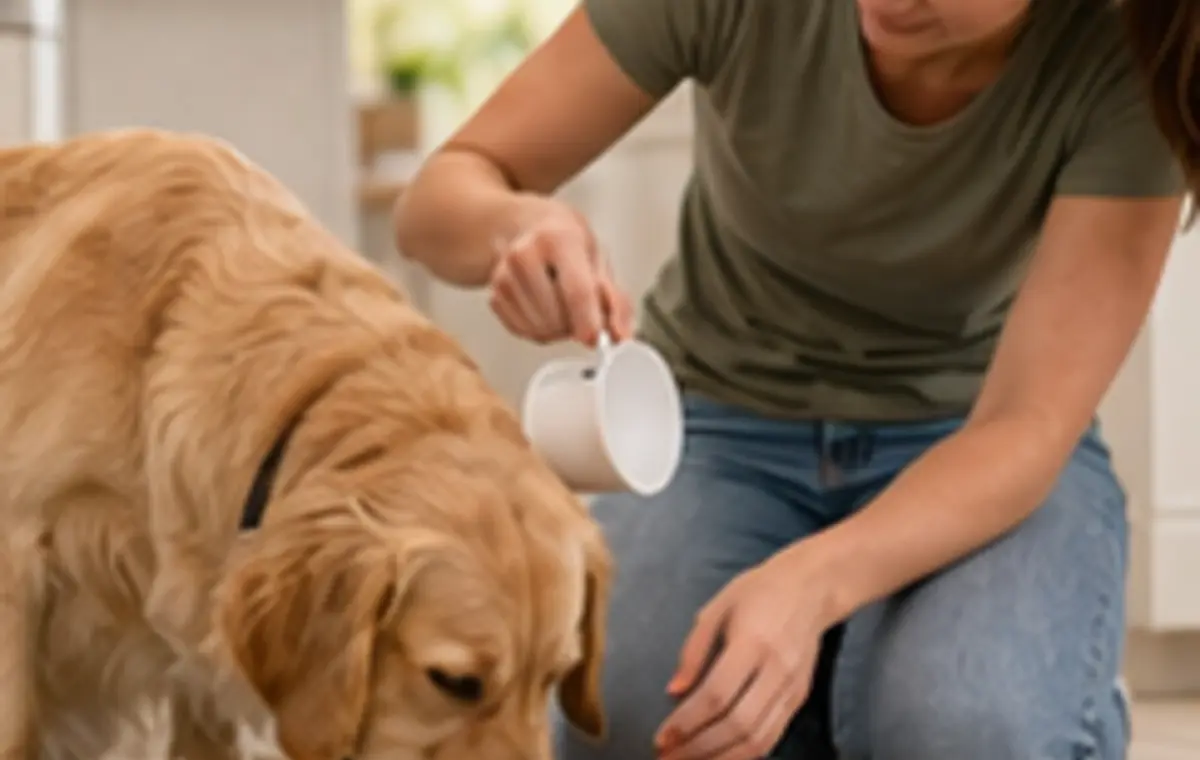
The feeding chart on a bag is a starting point, not a prescription. Two dogs at the same weight can need noticeably different portions because age, activity, body composition, and even room temperature affect energy use.
Start with calories, not cups
Check the label for calories per cup or per can. Then use the feeding range for your dog’s current healthy weight. If your dog needs to lose weight, ask your veterinarian which target weight to use rather than cutting food sharply on your own.
Measure with a level cup or, for better consistency, a kitchen scale. A ‘scoop’ can quietly become 20 percent larger from one meal to the next.
- Count treats and chews in the daily total
- Keep treats near 10 percent of daily calories
- Recheck portions after a food change
Use the body-condition check
You should be able to feel the ribs under a light layer of fat without pressing hard. Viewed from above, most healthy dogs have a visible waist; from the side, the belly usually tucks upward behind the ribs.
Coat type can hide changes, so use your hands and a monthly photo from above. Sudden weight gain or loss deserves a veterinary check.

Adjust slowly and observe
Keep the starting portion steady for two weeks, then review weight, waist, stool quality, hunger, and energy. If a healthy adult dog is gaining, reduce the total by about 5 to 10 percent and reassess. Growing puppies, pregnant dogs, and dogs with medical conditions need an individualized plan.
- Split the daily amount into two or more meals
- Use puzzle feeders for dogs that eat too fast
- Provide fresh water at all times
The useful takeaway
Keep the next step small, consistent, and suited to the dog in front of you. Track what changes, avoid forcing progress, and bring a veterinarian or qualified behavior professional into the plan whenever health, fear, or safety is involved.
Sources and review: Our editorial team checks care guidance against widely accepted veterinary and animal-welfare principles. See our editorial policy for sourcing, corrections, and update standards.