“Can my dog eat this?” sounds like a yes-or-no question, but the useful answer often depends on four details: the exact ingredient, the amount, the way it was prepared, and the dog who ate it. Plain cooked chicken and chicken curry are not the same exposure. A small piece and an entire container are not the same dose. A healthy adult and a dog with pancreatitis, food allergy, kidney disease, diabetes, or a veterinary elimination trial do not have the same margin for experimentation.
That makes a long alphabetical “safe food” list a poor substitute for a decision process. Lists encourage people to recognize one familiar ingredient and overlook onion powder, xylitol, alcohol, bones, excess fat, or another hazard in the finished dish. They can also turn occasional extras into a large, nutritionally unbalanced share of the diet.
This guide offers a conservative screen for deliberate sharing and a separate response plan for accidental ingestion. It cannot calculate a toxic dose for an individual dog. If a dog has eaten a potentially hazardous food, do not wait for an article to settle the question. Contact a veterinarian or animal poison-control service with the product, ingredient list, estimated amount, time, and the dog’s weight.
First decide whether this is sharing or an exposure
There are two very different situations.
Planned sharing means you are considering a small amount of a simple food for a dog who is currently well. You have time to inspect the ingredients, preparation, and calorie budget.
An exposure means the dog already ate something uncertain or hazardous, perhaps from a counter, trash bag, handbag, garden, medication wrapper, or package. The priority is identification and professional advice, not deciding whether the food belongs on a treat list.
If the item may contain xylitol, grapes or raisins, chocolate or caffeine, onion or garlic, alcohol, raw yeast dough, macadamia nuts, an unknown sweetener, a large quantity of salt or fat, cooked bones, mold, medication, or another toxin, treat it as an exposure. Keep the wrapper. Estimate the amount and time. Call promptly.
The four-part sharing screen
Before offering any human food deliberately, answer all four questions.
1. Is every ingredient known?
A whole carrot is one ingredient. A “vegetable snack” may contain onion powder, garlic, salt, oil, cheese, sweetener, or seasoning. Peanut butter may contain xylitol. A baked product may contain chocolate, raisins, macadamia nuts, alcohol, or yeast dough. A sauce can turn an otherwise ordinary food into an unsuitable mixture.
If you cannot read or verify the full ingredient list, do not offer it. “Only a little” does not solve an unknown ingredient problem.
2. Is the preparation appropriate?
For routine sharing, choose plain, cooked, unseasoned food without bones, skewers, wrappers, pits, hard seeds, or large choking-sized pieces. Avoid fried or very fatty preparations. Let hot food cool. Cut firm food into pieces appropriate for the dog’s size and chewing style.
Raw animal products introduce microbial risk to animals and people. In an FDA study of commercially available raw dog and cat foods, raw samples were more likely than the other tested food types to contain disease-causing bacteria. Freezing does not reliably remove that concern. A dog may carry or shed pathogens without obvious illness, exposing people and surfaces in the household.
3. Does it fit the dog’s health plan?
A food can be non-toxic and still be wrong for a particular dog. Examples include:
- a fatty bite for a dog with a history of pancreatitis
- cheese for a dog who develops diarrhea after dairy
- a high-sodium food for a dog on a restricted plan
- an extra carbohydrate source for a dog whose diabetes meals and medication require consistency
- any unapproved protein during a veterinary elimination diet
- a hard chew for a dog with painful or damaged teeth
- an unfamiliar food during active vomiting or diarrhea
If a veterinarian has prescribed a therapeutic diet, ask what extras are permitted. “Dog-safe” is not the same as compatible with treatment.
4. Does it fit the calorie and nutrition budget?
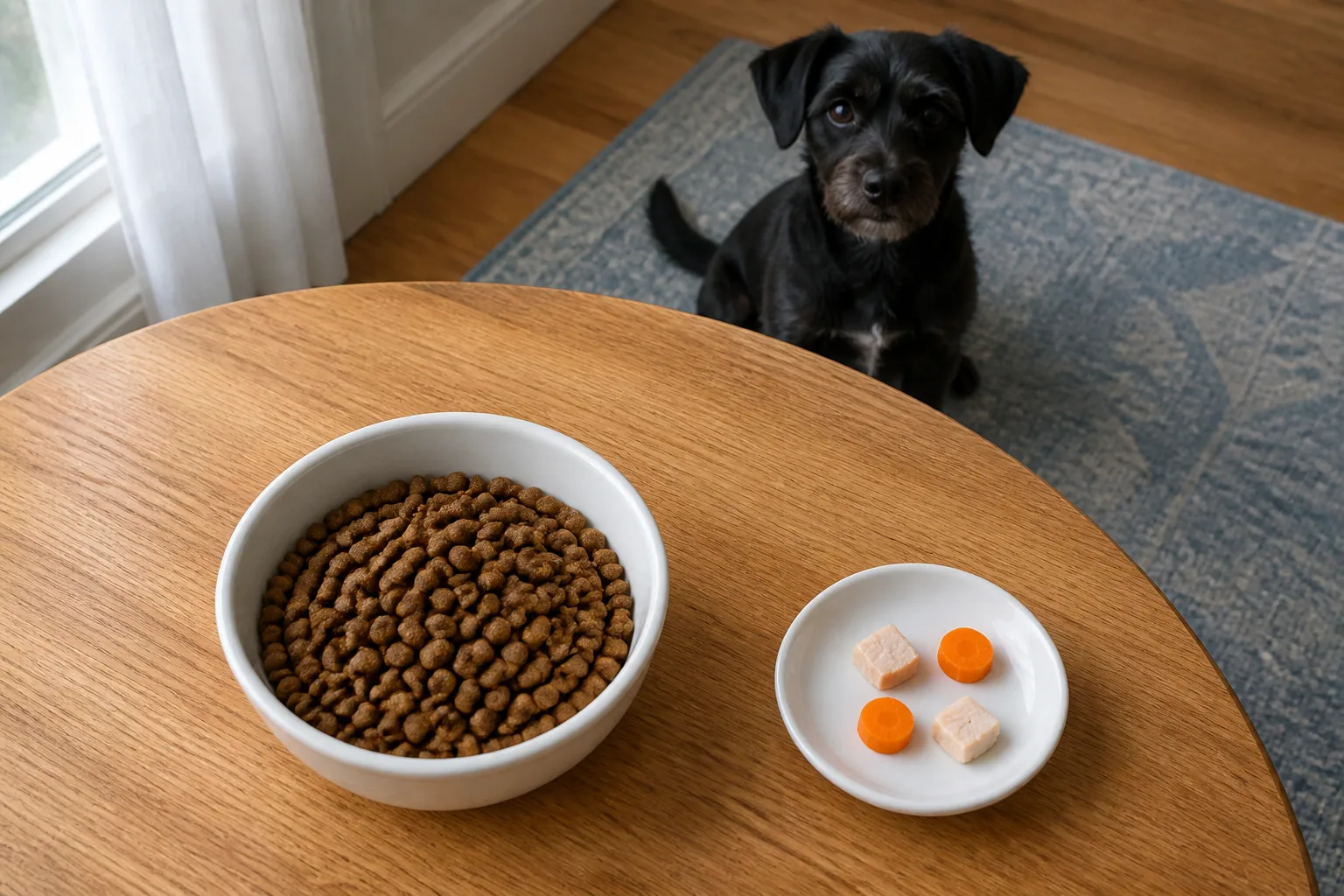
The main diet should do the nutritional work. AAHA identifies a risk when more than ten percent of daily calories come from foods that are not complete and balanced. This includes commercial treats, table foods, chew bones, and foods used for medication. The ten-percent figure is a ceiling for many healthy dogs, not a required allowance and not a guarantee that every food below it is suitable.
Small dogs reach that ceiling quickly. A bite that seems trivial beside a human plate may represent a large share of a small dog’s daily energy. If you share food for training, subtract it from the treat allowance and consider using measured pieces of the complete daily food instead.
Conservative candidates for occasional sharing
For a generally healthy dog with no conflicting veterinary plan, small pieces of certain plain foods are commonly used as occasional treats. Suitable preparation and tolerance still matter.
Plain cooked lean meat
Small boneless pieces of thoroughly cooked, unseasoned chicken, turkey, or lean beef may be practical high-value rewards. Remove skin, visible excess fat, bones, skewers, string, and sauce. Do not assume a rotisserie product is plain; seasoning blends may contain onion, garlic, or high salt.
Cooked meat is an extra, not a balanced replacement for the main food. Muscle meat alone does not provide all required nutrients in the right proportions.
Firm vegetables in manageable pieces
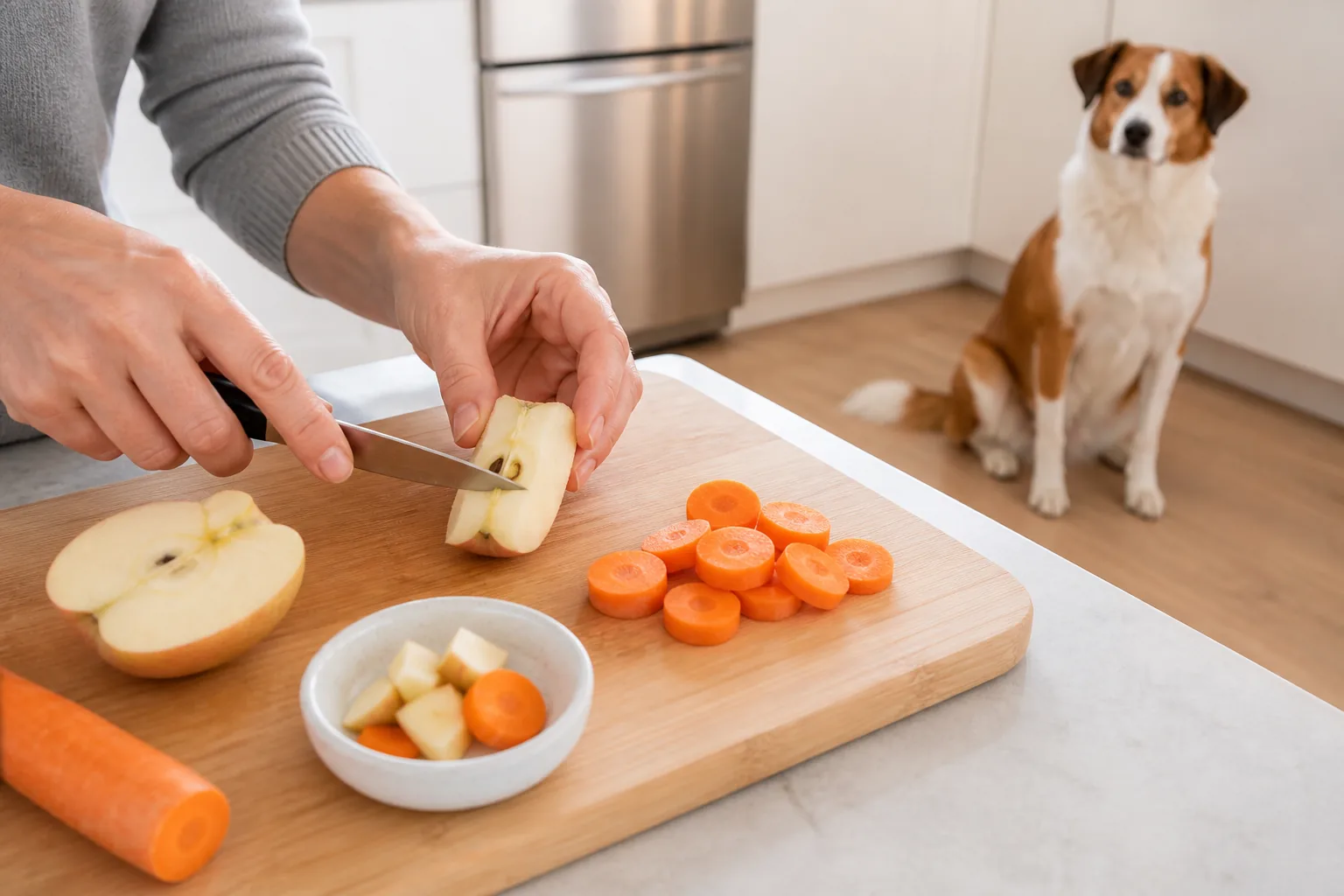
Plain carrot, green bean, cucumber, or similar simple vegetables may work for dogs who enjoy them. Offer a size and texture that the individual can chew safely. Steam or soften very firm pieces when needed. Avoid seasoning, butter, sauce, and mixed vegetable dishes unless every ingredient has been checked.
Vegetables are not “free calories,” and more fiber is not always better. A large unfamiliar amount can change stool. Introduce one small item at a time.
Small amounts of selected fruit flesh
Small pieces of apple flesh without seeds or core, banana, or seedless melon flesh may be used occasionally for dogs without a conflicting health plan. Remove pits, hard seeds, rind, stems, and packaging. Fruit contains sugar and calories, so portion still matters.
This category requires careful boundaries: grapes and raisins are not acceptable substitutes for other fruit. Do not generalize from “some fruit is shareable” to “fruit is safe.”
Plain cooked starches
Small amounts of plain cooked rice, oatmeal, potato, or sweet potato may be non-toxic for many healthy dogs, but they are not necessary additions to a complete diet. Avoid butter, salt, gravy, onion, garlic, and rich toppings. Do not create a long-term “chicken and rice” diet without veterinary direction; a temporary bland mixture is not complete nutrition.
A tiny taste of suitable dairy only if tolerated
Some dogs tolerate a small piece of plain cheese or a little unsweetened plain yogurt; others develop gas or diarrhea. The ASPCA notes that pets may have limited lactase, so dairy can cause digestive upset. Dairy can also be calorie-dense and fatty. Skip it when tolerance or health history is uncertain.
These examples are not a menu plan. Pick one appropriate item, offer a small amount, and observe. Stop if vomiting, diarrhea, itching, swelling, pain, or another concerning sign appears.
Foods that should stay off the sharing list
Xylitol and products with unknown sweeteners
Xylitol is found in some sugar-free gum, candy, baked goods, toothpaste, drink powders, supplements, and nut butters. In dogs it can cause a rapid, severe fall in blood sugar and, at higher exposures, liver injury. Merck notes that signs can begin quickly and that at-home attempts to induce vomiting are not recommended because of the potential for rapid hypoglycemia.
Read the ingredient list every time; formulations change. If xylitol is present or the sweetener is unknown, call a veterinarian or poison-control service immediately. Do not wait for symptoms.
Grapes, raisins, and foods containing them
Grapes and raisins can cause kidney injury in dogs. The risk is not reliably predicted by color, seed status, organic status, or whether another dog previously ate them without a problem. Raisins may be hidden in bread, cereal, cookies, trail mix, energy bars, and savory dishes.
Treat ingestion as time-sensitive. Collect the package and estimate the number eaten, but do not delay the call while trying to calculate a “safe” amount online.
Onion, garlic, chives, and related concentrated powders
Members of the Allium group can cause gastrointestinal irritation and damage red blood cells, potentially leading to anemia. Risk exists in raw, cooked, dried, and powdered forms. Powder is easy to overlook in seasoning blends, broth, baby food, gravy, marinades, soups, and snacks.
A visible onion can be removed from a plate, but its compounds may already be in the sauce. Do not share the dish after picking pieces out.
Chocolate, coffee, tea, and caffeine products
Chocolate risk varies with the type and amount: darker and baking chocolates are generally more concentrated sources of methylxanthines than milk chocolate. Coffee grounds, caffeine tablets, energy products, and some desserts also create concern. A sugar-free chocolate product may add xylitol risk.
Call with the package, cocoa percentage or product type, estimated amount, time, and dog’s weight. Do not rely on the absence of immediate symptoms.
Alcohol and raw yeast dough
Alcohol-containing beverages, desserts, fermenting products, and raw dough can cause serious poisoning. Raw yeast dough can expand in the stomach and produce alcohol as it ferments. This is not equivalent to a small piece of fully baked plain bread.
Seek urgent advice after exposure. Keep dogs away from unattended drinks, fermenting mixtures, and dough left to rise.
Macadamia nuts and fatty nut mixtures
Macadamia nuts can cause weakness, incoordination, vomiting, tremors, and increased body temperature in dogs. Other nuts and fatty foods may cause digestive upset and can contribute to pancreatitis in susceptible dogs. Nut mixes may also contain raisins, chocolate, salt, seasoning, or xylitol-sweetened coatings.
Avoid using mixed nuts as treats and contact a professional about macadamia exposure.
Cooked bones, skewers, pits, cobs, and wrappers
Not every food emergency is poisoning. Cooked bones can splinter or injure the mouth and gastrointestinal tract. Corn cobs, fruit pits, skewers, foil, plastic, string, and absorbent pads can choke or obstruct. Grease-soaked wrappers may be swallowed with the food.
If an object was swallowed, call a veterinarian. Do not pull string from the mouth or rectum and do not induce vomiting unless specifically instructed.
Very fatty, salty, moldy, or spoiled foods
Large fatty meals can cause significant gastrointestinal illness and may contribute to pancreatitis in susceptible dogs. Excessive salt can cause dangerous electrolyte problems. Moldy food and compost may contain toxins. Trash combines several risks: spoiled food, bones, wrappers, medication, coffee grounds, and unknown quantities.
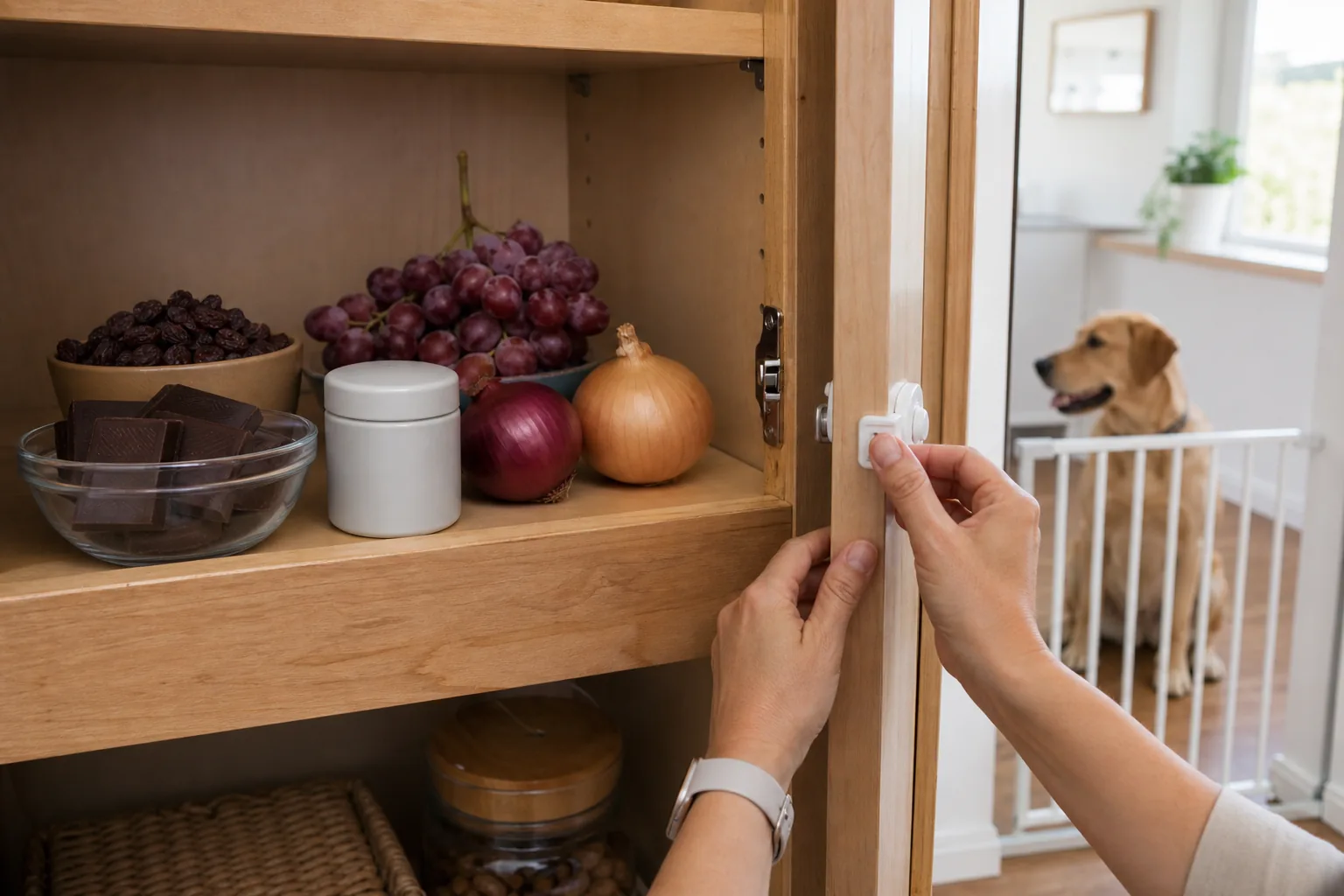
Secure trash and compost rather than trying to make their contents safe after access.
What to do after accidental ingestion
Use a calm information-first response:
- Move the dog away from the remaining product without risking a bite.
- Save the package, ingredient list, brand, and lot information.
- Estimate what is missing and when access occurred. State uncertainty honestly.
- Record the dog’s current weight, age, medical conditions, medications, and symptoms.
- Call a veterinarian, emergency hospital, or animal poison-control service.
- Follow the instructions given. Do not induce vomiting or give milk, oil, salt, charcoal, hydrogen peroxide, or another home remedy unless a veterinary professional specifically directs it for this dog and exposure.
The ASPCA Animal Poison Control Center publishes the number (888) 426-4435 for the United States; a consultation fee may apply. Other countries have different services. If the dog is collapsing, seizing, struggling to breathe, repeatedly vomiting, severely weak, or showing another emergency sign, go to emergency veterinary care while calling ahead.
Professional advice may depend on dose. A useful call identifies the actual product rather than saying only “chocolate” or “gum.” Photograph both sides of the package. If the item was homemade, list every ingredient and the amount used in the full recipe.
How to introduce an optional food without confusing the result
If the dog is healthy and the food passes the four-part screen, offer one small item—not a mixed plate. Keep the rest of the diet and treats stable. Observe appetite, stool, vomiting, itching, facial swelling, and behavior through the following day or longer when appropriate.
Do not introduce several new foods during the same weekend. If a problem follows, you will not know which ingredient or quantity mattered. Stop offering the item and seek veterinary advice for persistent or significant signs.
For training, cut rewards before the session so “one piece” does not grow as the dog succeeds. Soft rewards can be smaller than a fingernail for many dogs. Reward value comes from the dog’s preference and the context, not from the visual size of the piece.
Create a household food-safety rule
Consistency prevents more harm than memorizing a giant list. A practical rule might be:
- Only designated adults offer extras.
- Extras come from a pre-approved list for this dog.
- Every packaged food is checked for xylitol and other hazardous ingredients.
- No food is shared directly from a plate or table.
- The daily treat container limits quantity.
- Grapes, raisins, chocolate, gum, medications, and baked goods are stored behind closed doors.
- Children tell an adult when food drops; they do not chase the dog or reach into the mouth.
- Poison-control and emergency-vet information is saved in each phone.
Tell visitors the rule before food is served. A dog who scavenges should be separated safely during cooking and parties rather than expected to resist an unusually rich environment.
The decision to take away
Human food is not one category of equal risk. A deliberate bite of a known, plain, appropriately prepared food is different from an unknown mixed dish or accidental exposure. Screen every candidate by ingredient, preparation, individual health, and total calories. Keep extras small enough that the complete diet remains the nutritional foundation.
More importantly, learn the stop signs: xylitol, grapes and raisins, Allium ingredients, chocolate and caffeine, alcohol, raw dough, macadamia nuts, bones and obstruction hazards, excessive fat or salt, and unknown mixtures. When one of those is involved, the useful action is not to search until reassurance appears. Preserve the evidence and call a veterinary professional or poison-control service promptly.
A short approved list and a clear household rule will protect a dog better than a hundred-item graphic. Safe sharing is less about finding the maximum variety a dog can eat and more about keeping every optional bite identifiable, modest, and compatible with the animal in front of you.