An empty water bowl does not by itself prove that one dog drank too much. Water may have spilled, evaporated, been shared, used in food, or moved by another person. A dog may also drink more after exercise, heat exposure, a salty treat, a diet change, nursing puppies, or an interruption in access. The useful questions are whether intake has changed from that individual’s baseline, whether urine output also changed, and what other signs are present.
Persistent increased drinking and urination can accompany kidney disorders, diabetes mellitus, hormone disorders, liver disease, uterine infection in an intact female, high blood calcium, infection, medication effects, and other conditions. A behavior explanation is considered only after medical causes are assessed.
Do not restrict water to test the dog or reduce accidents. A dog producing unusually large volumes of urine may be drinking to replace essential losses. Restriction can cause dangerous dehydration or electrolyte disturbance. Keep fresh water available and arrange veterinary guidance.
Distinguish thirst, drinking, and urination
Veterinary records may use the terms polydipsia for excessive drinking and polyuria for excessive urine production. They often occur together, but either can drive the other. A dog may lose large volumes of dilute urine and drink to compensate; less commonly, excessive intake can lead to increased urine output.
Frequent trips outside do not always mean large urine volume. A urinary tract problem can cause repeated attempts that produce only small amounts. Straining, discomfort, blood, crying, or inability to pass urine is a different and potentially urgent pattern.
Record what you actually observe:
- more water consumed
- larger urine pools or longer urination
- more frequent normal-volume urination
- repeated small amounts
- accidents during sleep or inability to hold urine
- leaking versus deliberate posture
These details guide different diagnostic questions. Do not label every urinary change as “drinking too much.”
Know which signs cannot wait
Seek emergency veterinary care for collapse, severe weakness, trouble breathing, seizures, marked disorientation, repeated vomiting, inability to keep water down, a painfully swollen abdomen, severe bleeding, or suspected poisoning.
An inability to urinate, repeated straining with little or no output, crying during attempts, or a tense painful abdomen requires prompt emergency assessment. Do not keep offering walks in hope that the blockage clears.
An intact female dog who was recently in heat and now has increased thirst with lethargy, reduced appetite, vomiting, abdominal enlargement, feverish behavior, or vaginal discharge may have a life-threatening uterine infection. Discharge can be absent. Seek urgent veterinary care.
A dog with known diabetes who is vomiting, not eating, weak, dehydrated, breathing abnormally, or mentally altered needs immediate instructions. Do not improvise an insulin dose.
Arrange an appointment for a sustained change
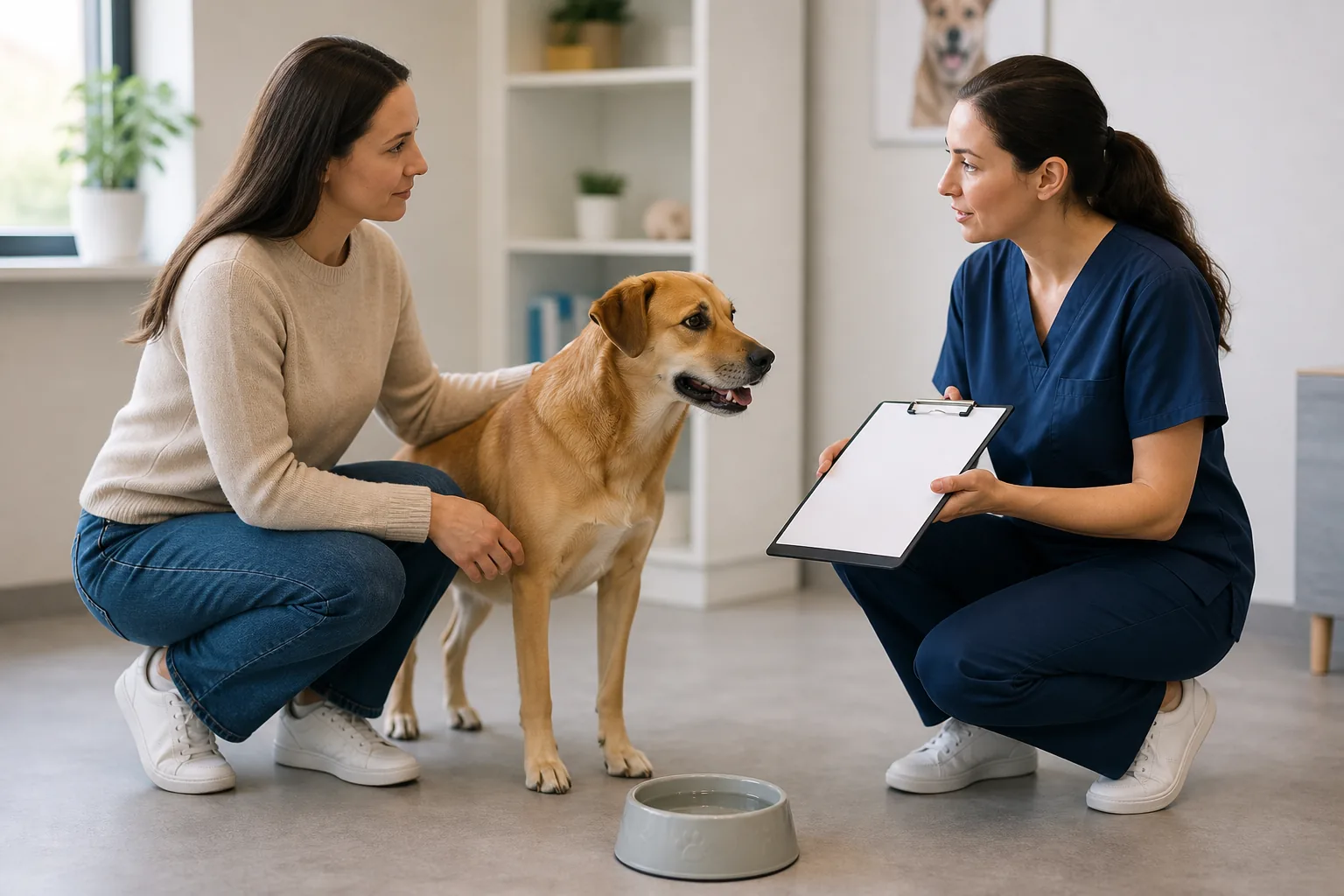
Contact the veterinarian when the dog consistently drinks or urinates more than normal, starts having accidents, empties bowls unexpectedly, needs new nighttime trips, or shows any related health change. Early evaluation is more useful than waiting for dramatic illness.
Tell the clinic when the change began and whether it is progressing. The team can set urgency based on age, reproductive status, medical history, medication, and accompanying signs.
Do not wait several days to measure intake when the dog appears ill. Measurement supports—not delays—care.
Measure intake over 24 hours without limiting it
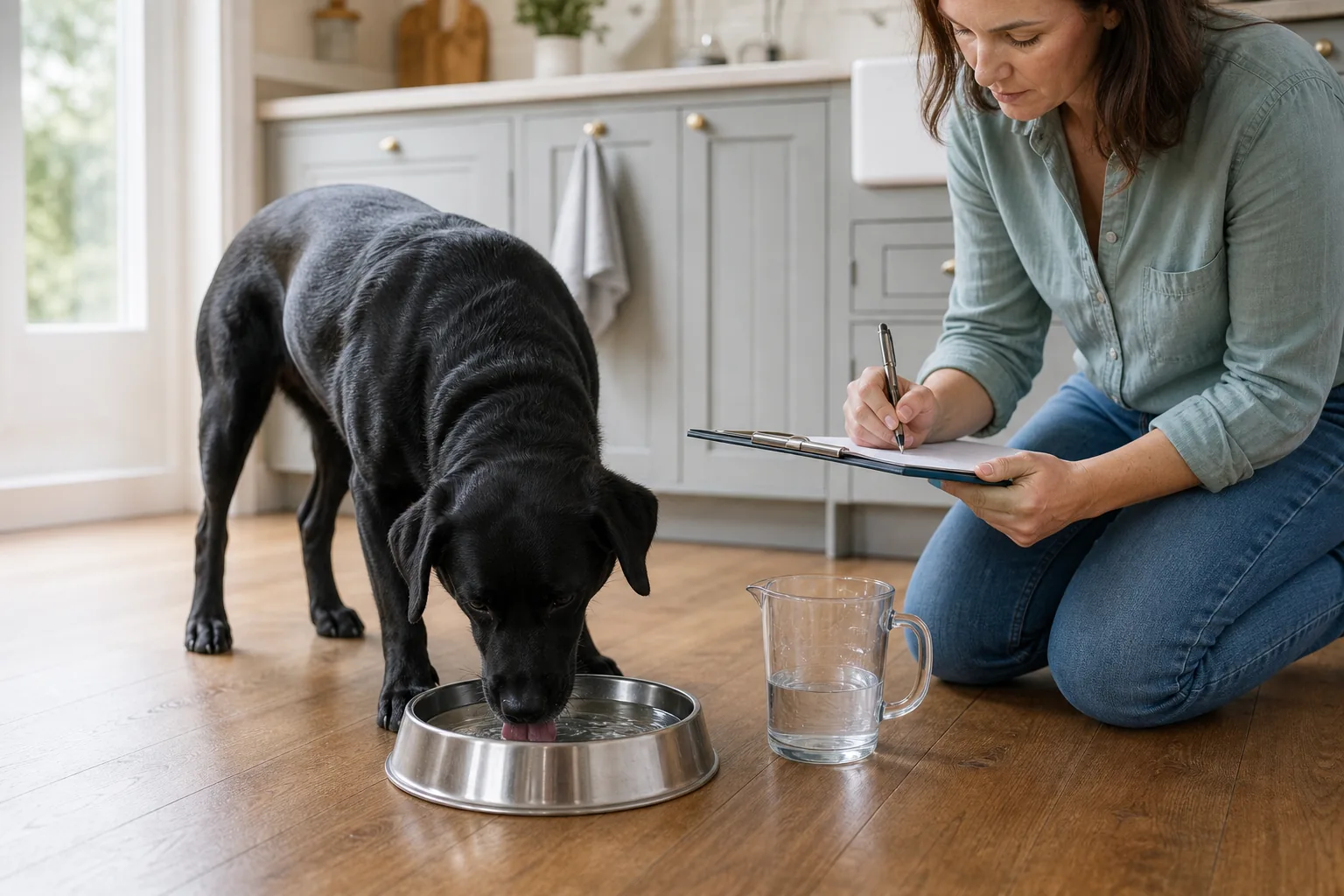
Ask the veterinary team whether and how to measure. A practical method for one stable dog is:
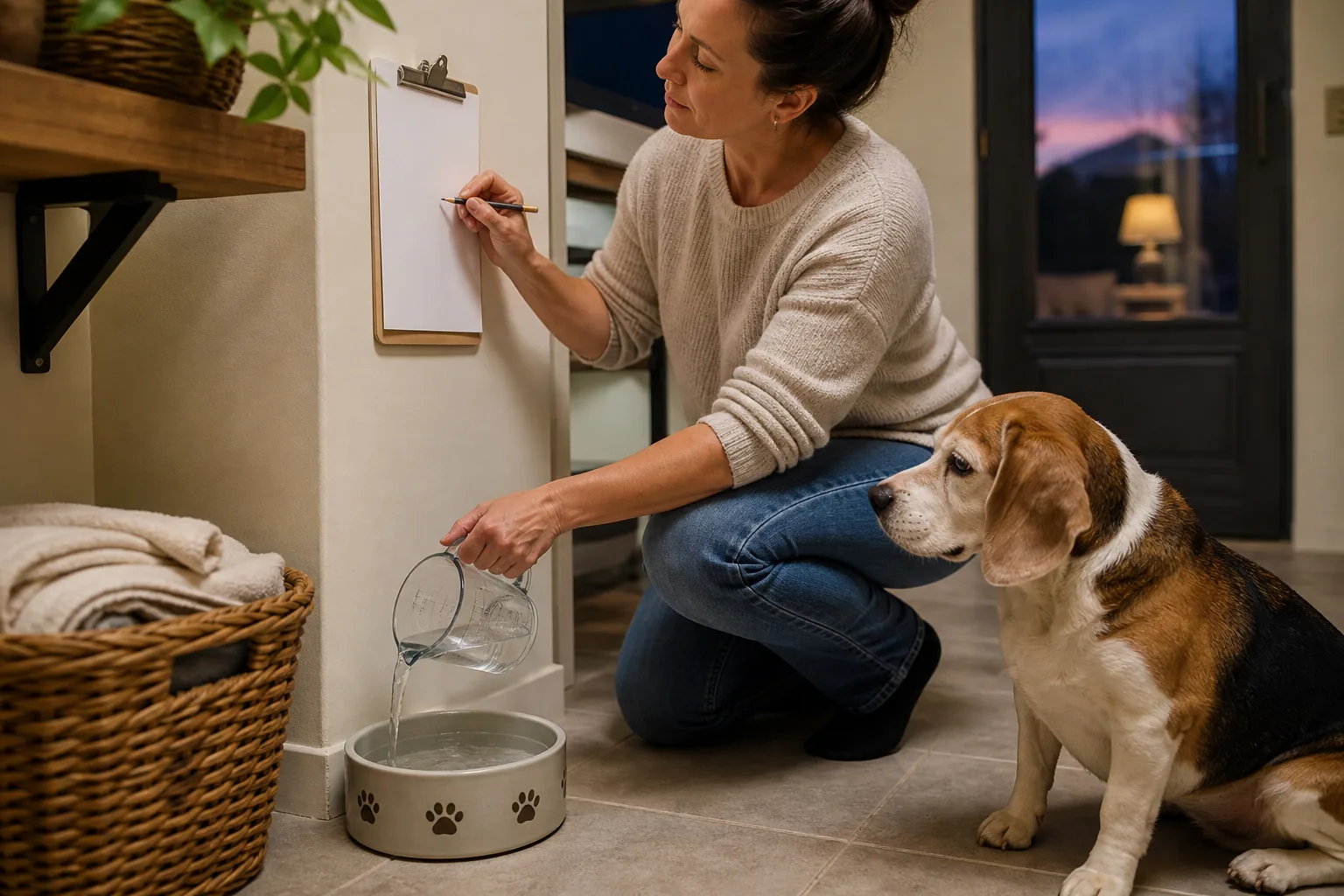
- Use a clean measured container to add water to all accessible bowls.
- Record every addition during a full 24-hour period.
- Measure water left at the end.
- Estimate and record spills separately.
- Include water added to meals if the veterinarian requests it.
- Record other sources such as toilets, fountains, outdoor bowls, puddles, or another home.
- Keep water freely available throughout.
Total added minus reliably measured remainder gives an estimate, not perfect truth. Repeat on two or three ordinary days if the veterinarian recommends and the dog remains stable.
In a multi-pet home, separate access only when it is safe and does not deprive any animal. Individual bowls in separate comfortable areas or a supervised period may help. Do not create conflict or isolate a dog with distress merely to obtain a number.
Automatic fountains and large reservoirs make measurement difficult. Temporarily use measured bowls if the dog accepts them and the veterinarian agrees, while ensuring capacity is always sufficient.
Avoid treating a generic threshold as a diagnosis
Veterinary references may discuss approximate milliliters per kilogram per day, but normal intake varies with diet moisture, weather, activity, life stage, lactation, health, and measurement method. A number above a reference is evidence for assessment, not a diagnosis. A meaningful increase from baseline may matter even before a generic cutoff is crossed.
Provide the dog’s current accurate weight and the total milliliters consumed. The veterinarian can calculate intake relative to body weight and interpret it with urine concentration, examination, and laboratory results.
Do not convert the number into a home water allowance. Diagnostic water-deprivation testing, when appropriate for rare conditions, is a controlled veterinary procedure after other causes have been excluded. It is not safe to reproduce at home.
Build a complete seven-day history
While waiting for a non-emergency appointment, log:
- water offered and estimated consumed
- urine frequency, volume pattern, color, odor, blood, and accidents
- appetite and food intake
- weight if a safe reliable scale is available
- vomiting or diarrhea
- energy, weakness, panting, sleep, and behavior
- current food, treats, chews, supplements, and salt-containing items
- medication name, strength, dose, and timing
- reproductive history for an intact female
- recent heat, exercise, travel, stress, or diet change
Use neutral descriptions. “Three large urine pools overnight” is more useful than “being naughty.” House-soiling from increased urine volume is not a training failure.
Take photographs of unusual urine color or accidents when useful, but do not delay cleaning or create a sanitation hazard. Video abnormal drinking or urination only in the course of ordinary observation.
Review medication without changing it
Some drugs can increase thirst and urination, including corticosteroids, diuretics, and certain anti-seizure medications. Supplements and compounded products also matter.
Tell the veterinarian about everything the dog receives, including topical products, injections, flavored preventives, and human medication exposure. Do not stop, reduce, skip, or change a prescribed drug independently. Sudden withdrawal can be dangerous for some medications, and the original condition may worsen.
If a medication error or accidental ingestion is possible, call immediately with the product, strength, amount, and time. Do not induce vomiting or give food unless instructed.
Consider ordinary explanations without dismissing disease
Heat and exercise
A warm day or vigorous activity can temporarily increase thirst. Provide unrestricted water and cooling. Persistent heavy panting, weakness, vomiting, diarrhea, confusion, collapse, or abnormal gums indicates heat illness and requires emergency care.
Diet moisture
Changing from canned or fresh food to dry food may increase water obtained from the bowl even if total water intake changes less. Adding water to food shifts the opposite way. Record diet changes and moisture rather than assuming disease or normality.
Salt and treats
Salty foods may stimulate thirst and can be unsafe in excess. Do not intentionally feed salt to test the response or encourage drinking. Record table food, chews, and treats.
Pregnancy and lactation
Nursing can substantially change water and calorie needs. An intact or nursing dog still can become ill. Veterinary reproductive guidance is appropriate, especially with weakness, discharge, feverish behavior, tremors, or poor care of puppies.
Stress or habit
Behavioral factors exist, but medical causes should be excluded first. Calling a pattern psychogenic based on boredom, breed, or anxiety can delay diagnosis.
Understand why the veterinarian needs urine and blood information
The diagnostic process usually begins with history and physical examination. The veterinarian may recommend a complete blood count, serum chemistry, electrolytes, urinalysis, urine culture, blood glucose assessment, imaging, blood pressure, or targeted hormone tests depending on findings.
Urinalysis helps show how concentrated the urine is and can identify glucose, blood, inflammatory cells, protein, and other clues. It must be interpreted alongside hydration, blood results, medication, and collection method. A single home dipstick cannot replace this evaluation.
The dog may need further testing because many diseases share thirst and urination signs. Targeted endocrine testing is chosen after more common explanations and interfering illness are considered. No symptom list can confirm diabetes, Cushing syndrome, kidney disease, or diabetes insipidus at home.
Collect a urine sample only as instructed
Ask whether the clinic wants a home sample and what container, timing, volume, and storage they require. Some tests need a sterile sample collected at the clinic, and a free-catch sample can be contaminated.
If instructed to collect:
- use the clean container supplied or approved
- avoid touching its inside
- catch midstream if feasible without frightening the dog
- label time and date
- store and deliver exactly as directed
Do not chase, restrain painfully, or postpone urination to get a sample. Never collect from a dirty floor and present it as sterile.
Do not give extra water solely to produce urine unless the veterinarian says to do so.
Diabetes mellitus is one possibility, not the default answer
In diabetes mellitus, high blood glucose can lead to glucose in urine, increased urine volume, and compensatory thirst. Increased appetite with weight loss is a classic cluster, but appetite can also decrease, and other signs occur.
Diagnosis requires persistent abnormalities and veterinary testing. Do not use a human glucose meter or urine strip alone to diagnose or begin treatment. Insulin type, dose, food schedule, monitoring, and concurrent disease require a veterinary plan.
For a dog already receiving insulin, changes in thirst, urination, appetite, weight, energy, vomiting, or infection can signal poor control or another problem. Contact the treating team before adjusting insulin.
Kidney and urinary disease can look different
Kidneys normally help concentrate urine and regulate water balance. Reduced concentrating ability can lead to larger volumes of dilute urine and increased drinking. Kidney infection, chronic kidney disease, and other renal problems require laboratory and sometimes imaging evaluation.
A urinary infection may produce frequent urination, accidents, discomfort, blood, or odor, but signs vary. Increased thirst may occur with infection or another concurrent condition. Antibiotics left from a prior episode should not be used; culture and drug choice matter.
Do not add electrolyte drinks, broth, supplements, or large amounts of salt. Some contain unsuitable sodium, onion, garlic, sweeteners, or other ingredients.
Hormonal and systemic causes require targeted evaluation
Hyperadrenocorticism can include increased thirst, urination, appetite, panting, abdominal shape, muscle loss, and skin or coat changes. Diabetes insipidus is rare and produces large amounts of dilute urine, but many more common causes must be excluded first. Liver disease, high calcium, some cancers, electrolyte disorders, and infection can also affect water balance.
These overlapping signs demonstrate why selecting one disease from an online list is unreliable. Testing should follow the veterinarian’s prioritized differential diagnoses.
Never attempt a water-deprivation test, hormone trial, or borrowed medication at home.
Keep water access safe and observable
Provide multiple clean bowls when needed and refill before empty. Wash them regularly. For dogs with mobility problems, place stable bowls on nonslip surfaces near resting areas without creating trip hazards.
Outdoor water can become hot, contaminated, or tipped. Toilets, pools, saltwater, puddles, and stagnant water are not substitutes for potable water. Prevent access to antifreeze, cleaners, fertilizer solutions, and other liquids.
If a dog gulps rapidly and vomits water, call the veterinarian. Do not ration without guidance; the dog may need medical stabilization.
During travel, carry familiar drinking water and offer breaks. Record unusual intake after heat or exertion and watch for heat-illness signs.
Manage accidents without punishment
Increase toilet opportunities, use washable protection, maintain skin hygiene, and block unsafe areas while diagnosis proceeds. Do not scold, rub the dog’s nose in urine, or remove water overnight.
An older dog may need a shorter route to the door, a ramp, nighttime lighting, or absorbent bedding. Those supports improve welfare but do not explain the medical cause.
If urine scald develops, contact the veterinarian for skin care. Do not apply human barrier creams that may be unsafe if licked.
Track response after diagnosis
Once a veterinarian establishes a plan, record water, urine pattern, appetite, weight, medication, and clinical signs at the requested interval. Attend blood, urine, blood-pressure, or imaging rechecks.
Improved thirst does not always mean the underlying disease is controlled, and continued thirst does not justify doubling medication. Report trends to the clinic.
Know the treatment-specific emergency signs and what to do after a missed or vomited dose. Keep prescriptions in original containers and prevent accidental access.
A practical call script
When calling, say:
“My dog weighs approximately __. Drinking increased from the usual pattern starting __. Over the last 24 hours I measured __ milliliters, with free access. Urination is __. Appetite and weight are __. Other signs are __. Current medications and supplements are __. The dog is/is not intact, and the last heat was __. There has/has not been heat exposure, vomiting, diarrhea, weakness, straining, or suspected toxin.”
Answering those questions helps the team assign urgency. If you do not have measurements, call anyway; observation of a clear change is enough to seek advice.
Measure, do not restrict
When a dog seems to drink much more, confirm the pattern with safe measurement, record urine and related signs, and arrange veterinary assessment. Keep water freely available. The dog may be compensating for losses that are not visible at the bowl.
Emergency signs bypass the log. Persistent change deserves examination even in a dog who seems comfortable. A good home record narrows the questions, but diagnosis comes from history, examination, urine and blood testing, and targeted follow-up—not from a threshold or symptom checklist alone.