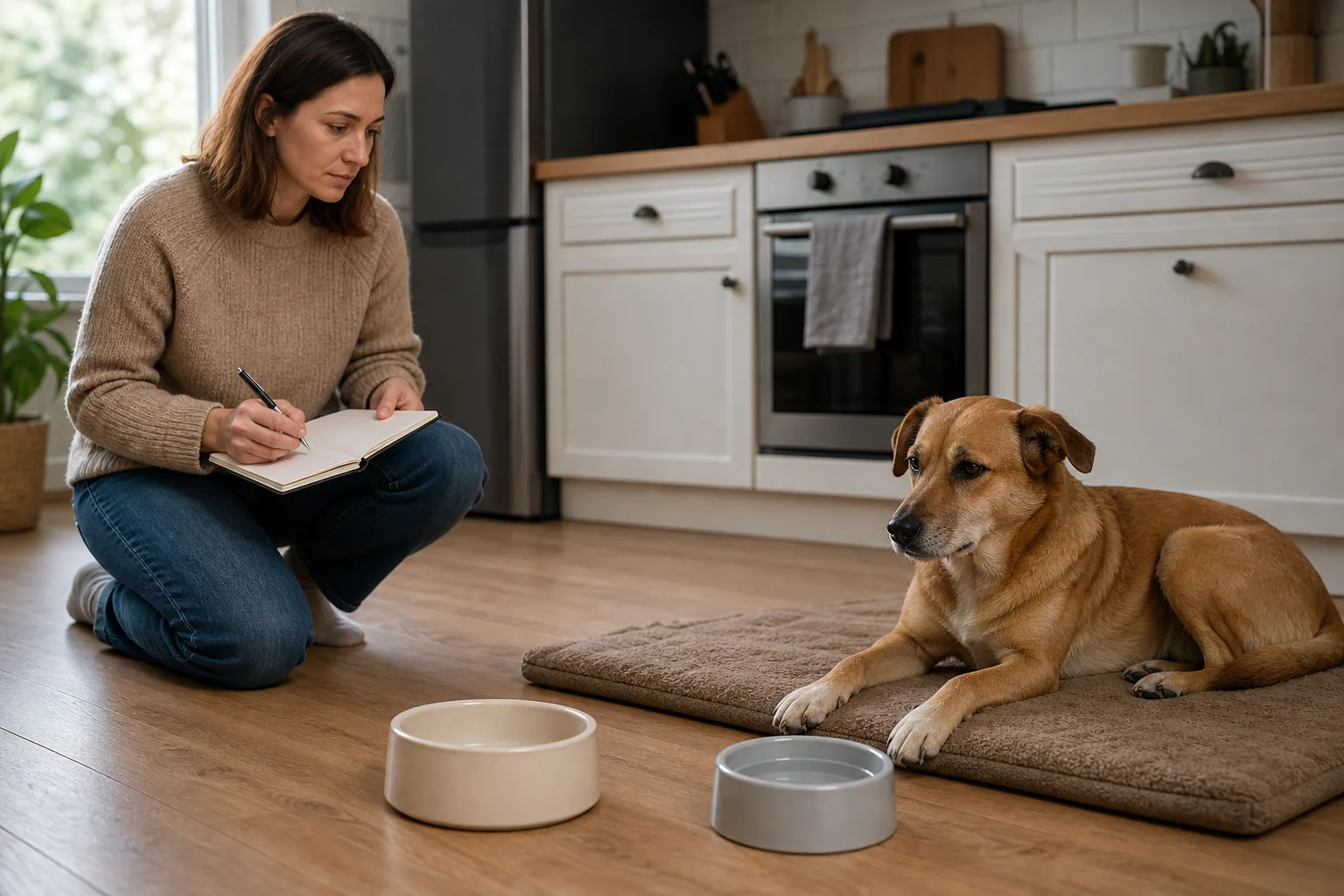
A skipped bowl is a sign, not a diagnosis. A dog may eat less because the food changed, the household is stressful, the mouth hurts, nausea is present, swallowing is difficult, pain makes it hard to reach the bowl, a medication affects appetite, or illness is developing elsewhere in the body. The same visible result—food left behind—can therefore require very different responses.
The safest first task is triage. Look at the whole dog, not just the bowl. Decide whether emergency signs are present, whether the dog wants food but cannot comfortably take it, and whether intake has truly changed from that individual’s normal pattern. Record specific evidence and contact the veterinary team early when the pattern is persistent, unexplained, or accompanied by other signs.
This guide does not provide a home diagnosis or a universal number of hours that every dog can safely go without eating. Age, size, health, medication, pregnancy, recent procedures, and the presence of vomiting, diarrhea, pain, or dehydration all change urgency. A puppy, diabetic dog, medically fragile dog, or dog under post-operative instructions should not be managed by a generic “wait and see” rule.
Start with emergency signs
Seek emergency veterinary care now if appetite loss occurs with collapse, severe weakness, trouble breathing, pale or blue-gray gums, repeated unproductive retching, a swollen or painful abdomen, uncontrolled bleeding, seizure activity, suspected poisoning, known ingestion of a foreign object, inability to keep water down, or rapidly worsening distress. Call the clinic while arranging transport so staff can advise on safe handling and prepare for arrival.
Do not delay because the dog ate a treat, because the abdomen is not dramatically enlarged, or because the dog briefly settled. Serious conditions can evolve, and a small high-value bite does not prove normal appetite or digestive function.
If poisoning is possible, preserve the package or a photo of the label and contact a veterinarian or an animal poison service. Do not induce vomiting, give human medication, force food, or administer a home remedy unless a veterinary professional specifically directs it for that dog and exposure.
Decide what “not eating” actually means
Owners use the phrase for several different patterns. Separating them helps the veterinarian.
No interest in food
The dog does not approach, sniff, or attempt to eat familiar food. This is a true reduction in appetite, but it still has many possible causes. Note whether interest in water, activity, people, walks, and treats also changed.
Interest without successful eating
The dog approaches or appears hungry but drops food, chews on one side, paws at the mouth, backs away, stretches the neck, coughs, gags, or repeatedly tries to swallow. VCA describes this broad distinction as true anorexia versus “pseudo-anorexia”: the latter dog may want food but be unable to pick it up, chew, or swallow normally. Oral, dental, jaw, throat, esophageal, neurologic, and pain problems are among the possibilities. This pattern needs examination; disguising it with softer or more tempting food can delay care.
Eating less, not eating nothing
Measure the remainder. “Half of a normally measured 300-gram daily ration” is useful; “barely anything” is not. Include treats, chews, table food, food stolen from another pet, and calories used for medication. A dog declining kibble after receiving a large quantity of rich extras may have consumed more than the empty bowl suggests.
Rejecting one food but accepting another
This can reflect preference, learned waiting for upgrades, food freshness, nausea, oral discomfort, or an association between a food and feeling ill. It does not by itself prove pickiness. A dog with mouth pain may accept soft food; a nauseated dog may briefly accept a novel treat and then turn away. Report the pattern without assuming its cause.
Meal timing changed
The dog may skip breakfast but eat dinner, graze slowly, or stop after a few bites. Compare with that dog’s established routine. A pattern that has always been stable is different from a sudden change, but a longstanding problem can still deserve review if body weight, stool, energy, or comfort is affected.
Run a calm whole-dog check
Observe before repeatedly offering alternatives. Check:
- alertness and ability to stand and walk normally
- breathing effort and rate at rest
- gum color, if the dog safely permits a look
- abdominal swelling, tension, guarding, or a prayer-like posture
- drooling, lip licking, repeated swallowing, retching, vomiting, or regurgitation
- diarrhea, constipation, straining, blood, or black stool
- coughing, gagging, nasal discharge, or difficulty smelling
- facial swelling, a broken tooth, mouth bleeding, or food falling out
- water intake and urination compared with normal
- possible access to trash, toys, bones, fabric, medication, chemicals, plants, or toxins
- recent injury, heat exposure, travel, boarding, vaccination, anesthesia, or procedure
Do not pry open a painful mouth or place fingers near a conscious dog’s teeth. Even a gentle dog may bite when frightened or hurting. Do not press deeply on the abdomen to decide whether an obstruction is present. Observation cannot clear a dog of internal disease.
Call earlier for higher-risk dogs
A puppy has smaller reserves and different feeding needs from a healthy adult. Toy-sized dogs may be vulnerable to blood-sugar problems. A pregnant or nursing dog has high nutritional demands. Seniors are more likely to have concurrent disease. A dog with diabetes may have medication timed to food intake, and giving the usual insulin when a meal is refused can be dangerous. Contact the prescribing veterinarian immediately for dog-specific instructions; do not independently skip, reduce, or repeat insulin.
Also call promptly for dogs with kidney, liver, pancreatic, gastrointestinal, endocrine, cardiac, or cancer conditions; dogs using medicines that affect appetite or require food; and dogs recovering from surgery or anesthesia. Follow discharge instructions over general internet advice. AAHA advises contacting the veterinary team when post-anesthesia eating does not return as expected or other concerning signs develop.
No universal deadline replaces these risk factors. One veterinary urgent-care service recommends evaluation after more than 12 hours without eating and treats refusal of even one meal in a diabetic animal as urgent. That threshold is a useful reason to call, not permission to wait 12 hours when other signs or individual instructions make the situation urgent sooner.
Build a timeline the clinic can use
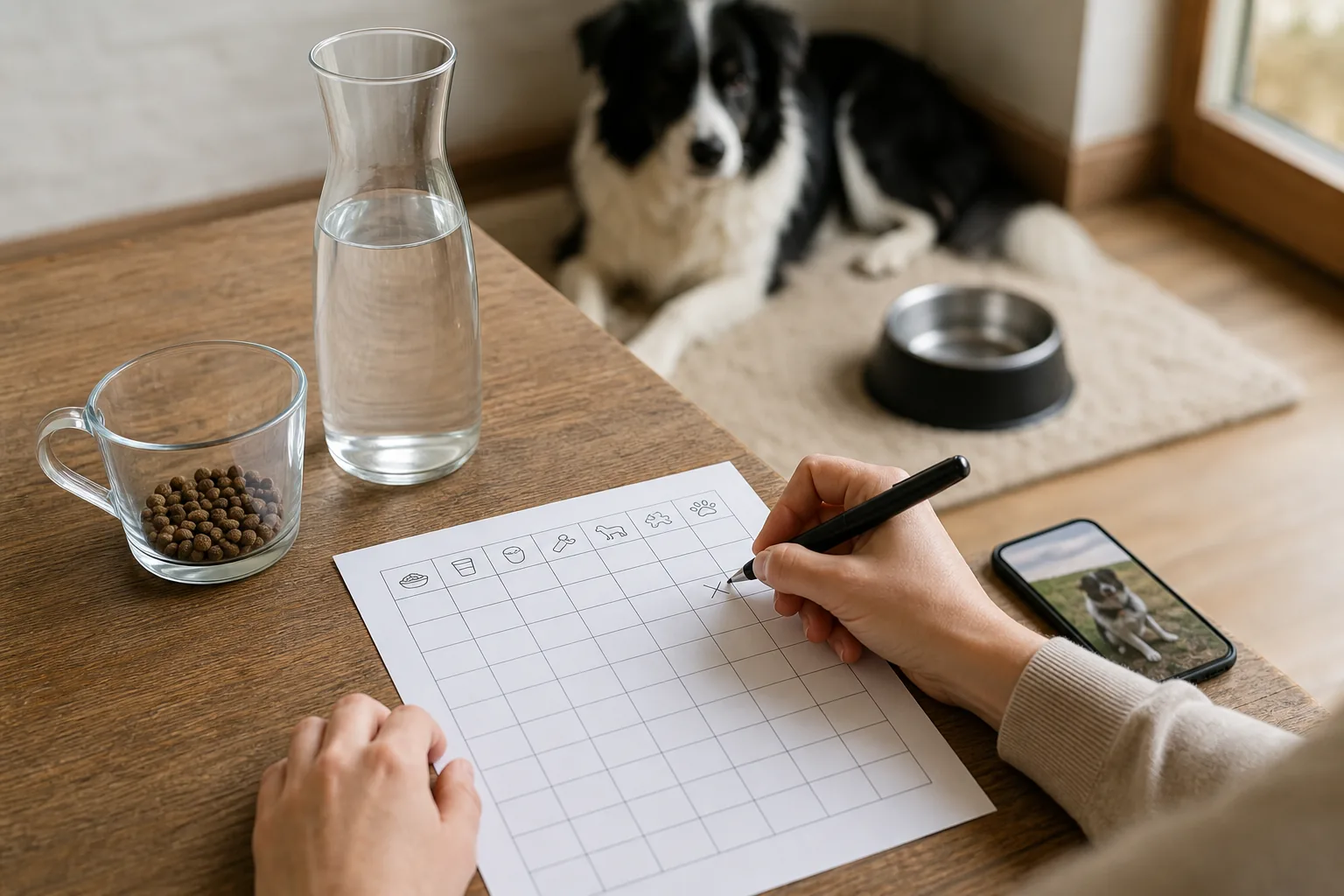
Write down the last confirmed normal meal and amount. Then record every offer and what was actually swallowed. Include:
- food brand, recipe, form, and lot information
- normal amount and current amount
- treats, chews, supplements, and table food
- water intake and urination
- vomiting versus passive return of food, with times and photos when safe
- stool appearance and timing
- energy, pain behaviors, and temperature exposure
- current medications, doses, and last administration
- recent diet changes and whether transition ratios were measured
- possible foreign-object or toxin access
- weight trend, if known
Bring packaging for a suspicious product and a list or photographs of medications. Do not spend hours creating a perfect log while the dog worsens. The timeline supports care; it does not replace it.
Check the food without assuming the food is the cause
Inspect the exact package. Look for an off odor, moisture, mold, insects, torn or swollen packaging, foreign material, an expired or unreadable date, or a product recall. Preserve the original bag and lot code. If the product appears abnormal or several animals became ill after eating it, stop using it, isolate the package, and contact the veterinarian and manufacturer or regulator as appropriate.
Confirm that another household member did not feed the dog and that automatic equipment dispensed correctly. In a multi-pet home, separate animals for a measured meal so intake can be assigned accurately.
A newly opened recipe may differ in texture, calorie density, or freshness from the previous food. But do not keep changing foods every few hours. Multiple rich alternatives can trigger gastrointestinal upset, obscure the history, and teach a healthy dog to wait for escalating choices. More importantly, repeated menu testing cannot rule out pain or illness.
Low-risk support while arranging advice
If the dog is an otherwise stable adult, has no emergency or prompt-care sign, and the veterinary team agrees that brief observation is appropriate, keep the approach simple.
Offer the normal measured food in a clean bowl in a quiet location. Separate other animals and remove social pressure. Use the normal meal window, then refrigerate or discard leftovers according to product guidance. Fresh water should remain available unless a veterinarian has given different instructions.
For suitable food, modest warming can increase aroma. Stir thoroughly and test temperature so no microwave hot spots remain. A small amount of warm water may change aroma and texture without creating a new diet, but moistened food should not sit out. Ask first if the dog has a prescription diet, fluid restriction, swallowing problem, or medical condition.
Do not force-feed with a syringe or push food into the mouth. This can cause distress, food aversion, choking, or aspiration, especially when swallowing or alertness is impaired. Veterinary feeding support, including a feeding tube when indicated, is controlled medical care—not a failure that owners should try to avoid with unsafe force.
Do not start an appetite stimulant, antacid, pain reliever, anti-nausea drug, leftover antibiotic, cannabis product, or human medicine on your own. Some human products are toxic to dogs; others alter examination findings or interact with existing treatment. Appetite stimulation without addressing pain, obstruction, nausea, or metabolic disease can mask the problem.
Avoid unsupervised fasting rules. Older advice commonly recommended withholding food after gastrointestinal signs, but current nutritional support depends on the diagnosis and the dog. A veterinary team may prescribe a specific feeding pause or therapeutic diet, yet that is different from automatically withholding nutrition from every dog who refuses a meal.
Stress may contribute, but it remains a diagnosis of context
Moving, boarding, loud construction, a new pet, a missing family member, conflict near the bowl, or a major routine change can reduce intake. Create a quiet, familiar feeding station and restore predictable timing. Allow distance; do not coax continuously or turn meals into a social performance.
Still, stress and illness can occur together. A recent move does not exclude dental disease, nausea, pain, or a foreign object. If appetite does not return promptly, other signs appear, or the dog is listless, obtain veterinary guidance.
Look for pain outside the stomach
AAHA notes that pets may eat less when chewing, swallowing, or lowering the head to a bowl is uncomfortable. Observe whether the dog hesitates on stairs, resists neck movement, has difficulty settling, pants at rest, avoids touch, or changes posture. A raised bowl might make access temporarily easier for some mobility problems, but it should not become a home test or permanent treatment without advice.
Dental pain can be subtle. Bad breath, dropping kibble, chewing on one side, facial swelling, blood, pawing at the mouth, or choosing soft food warrants examination. Do not probe a tooth or give human dental gel.
Understand what an examination may investigate
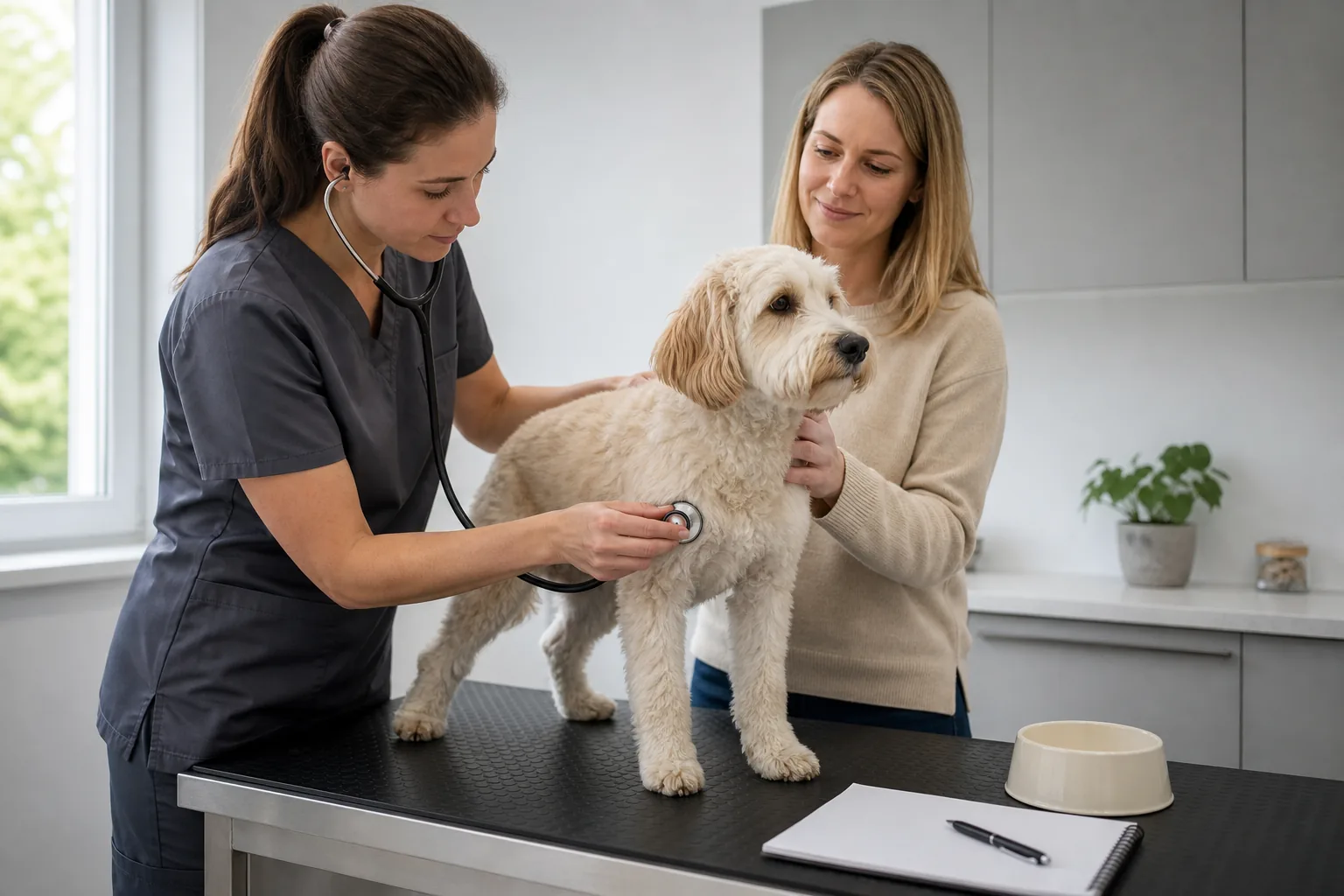
Because appetite loss is nonspecific, the veterinarian begins with history and physical examination. Depending on findings, testing may include a blood count, chemistry and electrolyte profile, urinalysis, fecal testing, imaging, infectious-disease testing, oral examination, or other targeted diagnostics. Not every dog needs every test.
The clinician may distinguish lack of desire to eat from inability to eat, assess hydration and pain, review medicines and exposures, and decide whether nausea control, fluids, dental treatment, dietary support, imaging, or another intervention is appropriate. Treatment follows the cause; there is no single remedy called “fix appetite.”
Ask what amount the dog should eat during recovery, which exact foods are permitted, how medicines relate to meals, what signs require a recheck, and when to report if intake remains below target. Write the instructions down.
Prevent the history from becoming confusing
Once a plan is set, designate one person to track feeding. Use a measured daily container and log the amount offered and remaining. Prevent access to other pets’ bowls and trash. Keep prescribed and ordinary foods clearly labeled.
If a food trial or therapeutic diet is part of diagnosis, unapproved treats, flavored medicines, chews, and table scraps may invalidate it. Follow the veterinary plan precisely and ask before substituting a similar-looking product.
Do not report success solely because the dog accepted roast meat or cheese. Record what was eaten, but remember that a high-value bite may not supply complete nutrition or demonstrate recovery. Return to the planned diet and quantity under veterinary direction.
A practical triage framework
Use three lanes rather than a single countdown.
Emergency now
Choose emergency care for collapse, breathing difficulty, pale or blue-gray gums, repeated dry retching, abdominal swelling or severe pain, seizures, major trauma, suspected poisoning, known foreign-object ingestion with signs, inability to retain water, or rapid deterioration.
Prompt veterinary contact
Call promptly for a puppy or medically vulnerable dog; a diabetic dog refusing a meal; pain while approaching, chewing, or swallowing; repeated vomiting or regurgitation; persistent diarrhea; blood or black stool; marked lethargy; dehydration concerns; weight loss; increased thirst or urination; medication-related change; or unexplained refusal that persists. Use the veterinarian’s threshold if it is shorter than general guidance.
Brief measured observation only when appropriate
Observation may be reasonable for an otherwise normal healthy adult who misses part of one meal, has no associated signs, has no relevant medical condition or exposure, and can be monitored closely. Confirm with the clinic if uncertain. Record intake and stop observing if anything changes.
The decision to take away
When a dog does not eat, resist two opposite mistakes: dismissing the change as stubbornness and treating the bowl with an uncontrolled parade of foods and medicines. First screen for emergencies. Then describe whether the dog lacks interest, wants food but cannot manage it, or eats only selected items. Measure actual intake and examine the wider pattern of water, stool, vomiting, comfort, energy, medication, and exposure.
Call earlier for young, small, senior, pregnant, nursing, diabetic, chronically ill, medicated, or recovering dogs. Preserve product and timeline details. Offer only low-risk environmental support when the dog is stable and veterinary guidance permits it.
Appetite loss is valuable information. The goal is not to win one meal at any cost; it is to recognize when the individual dog needs diagnosis, protect hydration and nutrition under an appropriate plan, and give the veterinary team evidence that leads to timely care.